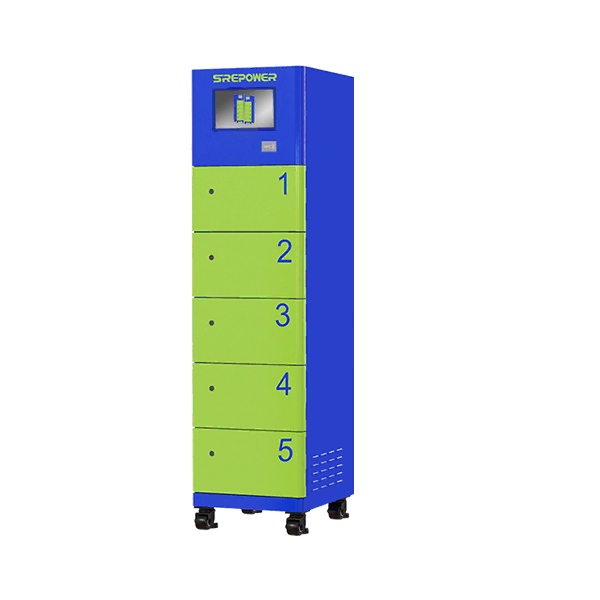
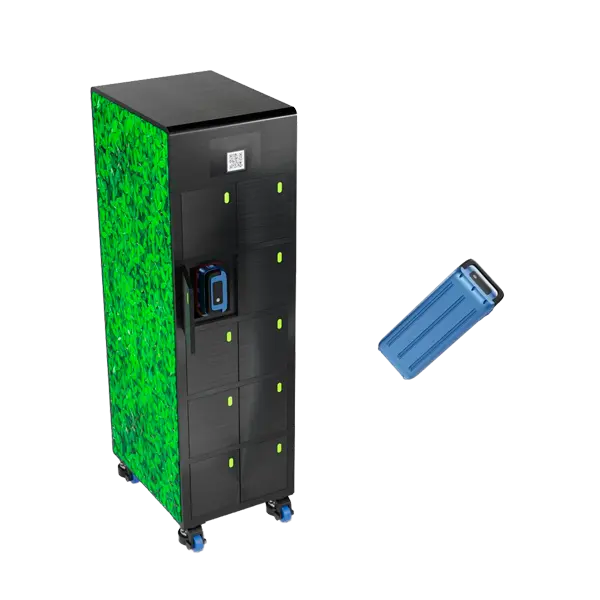
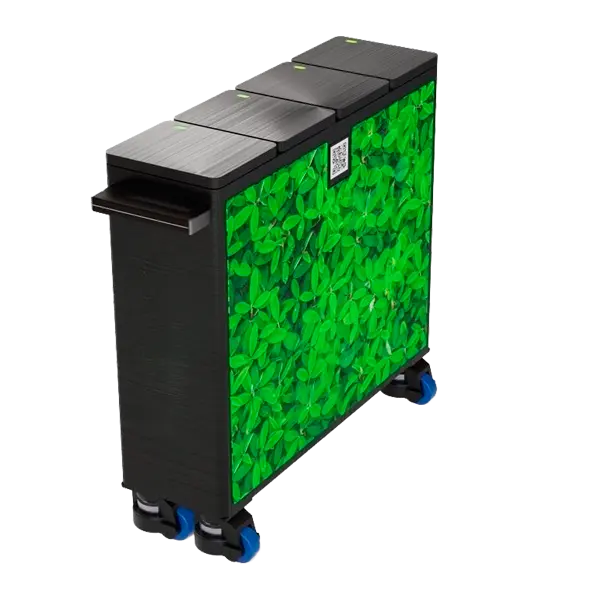
5 core indicators for selecting a battery swapping cabinet supplier.
In today's rapidly developing two wheeled vehicle battery swapping market, more and more people are starting to lay out battery swapping infrastructure. As the core hardware of the entire battery swapping network, the selection of suppliers for the battery swapping cabinet directly affects the subsequent operational efficiency, cost control, and user experience.

But when faced with numerous manufacturers and suppliers of battery swapping cabinets in the market, how to determine who is more worthy of cooperation? The answer is not in the brochure, but in several key indicators. Starting from the actual needs of battery swapping operators and investors, this article outlines five core indicators that must be considered when selecting battery swapping cabinet suppliers.
1. Equipment stability and failure rate
The battery swapping cabinet is a basic infrastructure that operates 24/7. Once frequent downtime or issues such as cabinet jamming or communication interruption occur, it not only affects user usage but also increases maintenance burden and customer complaints. Therefore, the long-term stable operation capability of the equipment is the primary consideration.
Suggested focus:
Does the supplier provide historical equipment mean time between failures (MTBF) data;
Is there a mature remote diagnosis and automatic alarm mechanism;
Actual operating cases in complex environments such as high temperature, high humidity, rain and snow.
Stable and reliable equipment means lower maintenance costs and higher user satisfaction.
2. System compatibility and scalability
The battery swapping business is often not a one-time transaction, but requires continuous iteration and upgrading with the expansion of network and user growth. If the initially selected battery swapping cabinet system is closed and the interface is not open, it will be extremely difficult to connect to a new platform, add new functions, or replace the backend system in the later stage, and even require a complete replacement of the equipment.
The key to consider is:
Does the cabinet support standard communication protocols (such as HTTP/MQTT);
Do you have API interfaces to facilitate integration with your own operational platform;
Does it support future software remote upgrade (OTA) without on-site disassembly.
Choosing a system with good scalability can lay a solid foundation for future large-scale operations.
3. Professional service capability
Even the best equipment inevitably requires maintenance. Whether the device can respond and solve the problem within 24 hours when it encounters an abnormality directly determines the availability and user churn rate of the site. Especially in third - and fourth tier cities or remote areas, having a professional service team is particularly crucial.
The evaluation points include:
Does the supplier have service outlets in the main operating areas nationwide;
Do you provide a 24/7 technical support hotline;
Whether the spare parts inventory is sufficient and whether "next day delivery" replacement can be achieved.
Specialized services are not bonus points, but a fundamental requirement for ensuring business continuity.
4. Cabinet safety protection level
Battery swapping cabinets are usually deployed in outdoor public areas and face various risks such as human damage, rainwater erosion, and voltage fluctuations. If the cabinet protection is insufficient, it may cause equipment damage or even lead to safety accidents, posing legal and reputational risks.
Please confirm:
Whether the cabinet meets the protection level of IP54 or above;
Whether there are physical and electrical safety designs such as anti pry, anti disassembly, and anti short circuit;
Has it passed the relevant national electrical safety certification (such as CCC, CE, etc.).
Safety is not a cost, but a bottom line. An accident may offset several months of operating income.
5. Comprehensive cost and investment return cycle
Many operators only look at the unit price of equipment, but ignore the full lifecycle cost. Low priced equipment may bring hidden expenses in terms of energy consumption, failure rate, maintenance frequency, etc., which may actually prolong the current cycle.
Suggest evaluating from a holistic perspective:
Purchase price of a single device vs expected service life;
Whether the daily average power consumption level is energy-saving;
Operation and maintenance manpower investment and fault handling costs;
Does the supplier provide flexible cooperation models (such as installment, leasing, joint operations, etc.).
A truly high-quality supplier not only sells equipment, but also helps you settle long-term accounts.
Conclusion
Choosing a supplier and manufacturer of battery swapping cabinets is not about who can make the most of their advertisements, but about who can withstand practical tests in terms of stability, compatibility, service, safety, and cost-effectiveness. For operators, this is related to the smoothness of daily operations; For investors, this directly affects the cash flow and exit expectations of the project.
Choosing the right partners is more important than blindly expanding in the industry, as it shifts from "racing and enclosure" to "refined operation". Spending three days conducting an in-depth evaluation of a supplier may save you three years of operational troubles.
Hot Keywords:
swap charging station
battery swap station




 WhatsApp Contact
 WhatsApp Contact