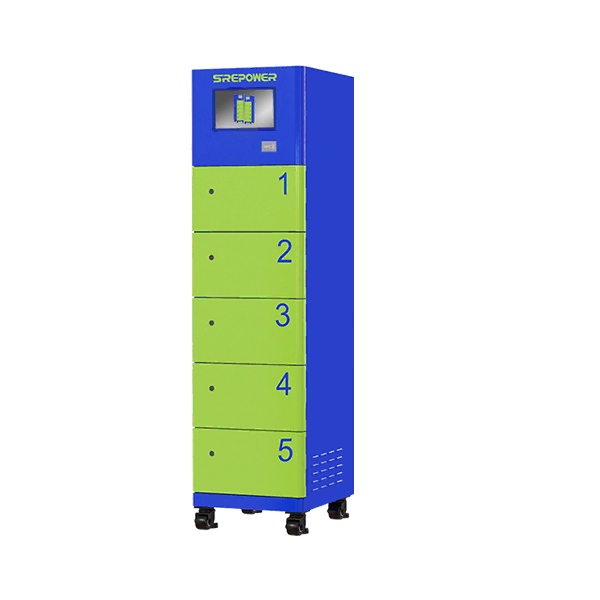
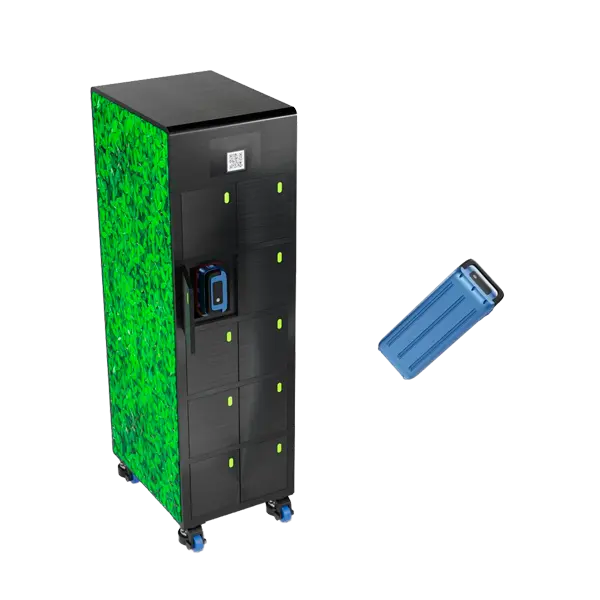
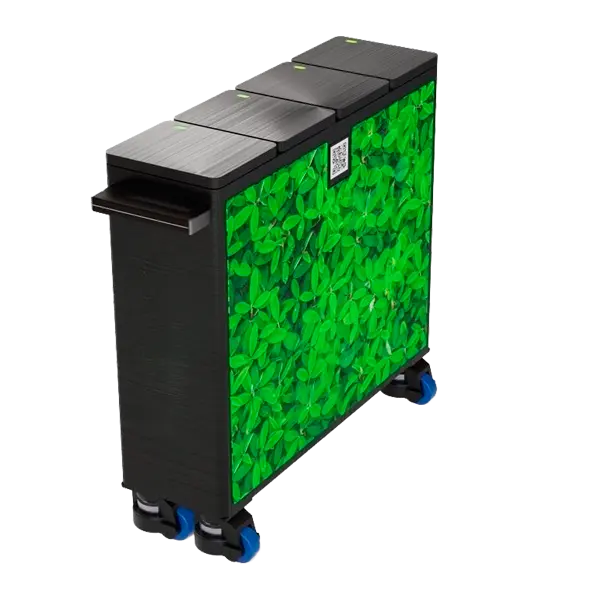
Overview of battery specifications for battery swapping cabinets.
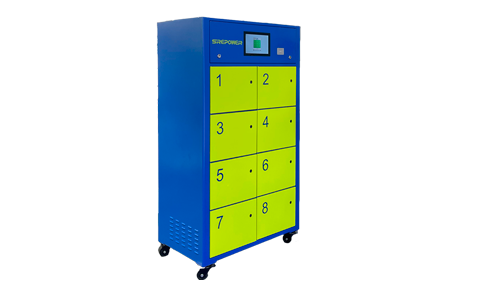
As an emerging energy supplement facility, battery swapping cabinets are playing an increasingly important role in the field of electric mobility. Understanding the battery specifications that are compatible with battery swapping cabinets is of great significance for users, operators, and the development of the entire industry. At present, the compatibility of battery swapping cabinets in the market is closely related to the type and voltage specifications of the batteries. From the perspective of battery types, lithium batteries have become the mainstream adaptation object for battery swapping cabinets; In terms of voltage, there are also various common specifications to choose from.
Analysis of battery type adaptation
Lithium batteries have become the mainstream choice
Currently, over 90% of smart battery swapping cabinets on the market only support lithium batteries. This is mainly based on the following reasons. Firstly, in terms of energy density, lithium batteries have an energy density that is more than three times that of lead-acid batteries. Under the same capacity, lithium batteries have a smaller volume, making them more suitable for standardized compartment design in battery swapping cabinets. The battery compartment space of the battery exchange cabinet is limited, and smaller lithium batteries can more efficiently utilize the compartment space and increase the battery storage capacity of the battery exchange cabinet. Next is the cycle life, with lithium batteries having over 1500 cycles, while lead-acid batteries only have 300 cycles. In high-frequency battery swapping scenarios, the lifespan advantage of lithium batteries is significant, as they can reduce the frequency of battery replacement and lower operating costs. Furthermore, safety is a concern. The intelligent battery swapping cabinet is equipped with a BMS (Battery Management System) that can monitor the voltage, temperature, and other parameters of the lithium battery in real-time. However, lead-acid batteries lack data interfaces and are difficult to be compatible with the BMS of the battery exchange cabinet, making it impossible to achieve effective real-time monitoring and posing certain safety hazards.
Reasons for limited adaptation of lead-acid batteries
Lead acid batteries face many limitations in the adaptation of battery swapping cabinets. In addition to the low energy density, short cycle life, and lack of data interface that make it difficult to be compatible with BMS mentioned above, the weight of lead-acid batteries is also an important factor. Lead acid batteries are relatively heavy, which increases the difficulty of operation during the battery replacement process, making it inconvenient for both users and operators. Moreover, lead-acid batteries may generate flammable and explosive gases such as hydrogen during the charging process, which poses certain safety risks. This also makes battery swapping cabinet operators more inclined to choose lithium batteries.
Common voltage specifications for adaptation
Mainstream universal voltage specifications
The mainstream universal battery swapping cabinet supports 48V, 60V, and 72V lithium batteries. These voltage specifications can meet the needs of different types of electric vehicles. For example, some small electric bicycles may be compatible with 48V batteries, which have relatively low power requirements; Some electric motorcycles or large electric scooters may require 60V or even 72V batteries to provide stronger power. The battery swapping cabinet automatically matches charging parameters through intelligent recognition technology, avoiding the risk of voltage mismatch. When users place lithium batteries of different voltage specifications into the battery exchange cabinet, the intelligent system of the cabinet can quickly identify the voltage of the battery and adjust the corresponding charging parameters to ensure safe and efficient charging of the battery.
Application scenarios with different voltage specifications
48V batteries are widely used in small electric bicycles. This type of electric bicycle is usually used for short distance travel in cities, such as commuting to work, grocery shopping, etc. Its power demand is relatively small, and a 48V battery can provide sufficient range, while also complying with the regulations in the "Safety Technical Specifications for Electric Bicycles" for electric bicycle batteries with a nominal voltage of less than or equal to 48V. A 60V battery is suitable for some slightly larger electric bicycles or electric bicycles with certain power requirements. These types of vehicles may have higher demands for range and power performance, and a 60V battery can meet their usage requirements. A 72V battery is generally used for electric motorcycles or some high-performance electric scooters. These vehicles typically have high speeds and strong power, requiring a 72V battery to provide sufficient energy.
Requirements for other specifications of batteries in the battery swapping cabinet
The relationship between battery capacity and battery swapping cabinet
Battery capacity is also an important factor in the adaptation of battery swapping cabinets. Different battery swapping cabinets may have different requirements for battery capacity. Generally speaking, the battery swapping cabinet will be adapted to a certain capacity range of batteries according to its own design and operational needs. Larger capacity batteries can provide longer range, but at the same time, they also take up more cabin space. Therefore, battery swapping cabinet operators need to balance battery capacity and warehouse space utilization. For example, some battery swapping cabinets may be compatible with batteries with capacities ranging from 20Ah to 60Ah to meet the needs of different users. For some users who have high requirements for battery life, they can choose high-capacity batteries; For users traveling short distances, smaller capacity batteries may be sufficient.
Compatibility between battery size and battery swapping cabinet compartment
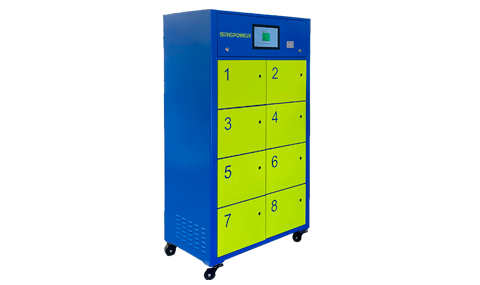
The size of the battery must be compatible with the compartment of the battery exchange cabinet. The compartment of the battery exchange cabinet has fixed size specifications, and the length, width, and height of the battery need to be within the allowable range of the compartment. If the battery size is too large, it will not be able to fit into the compartment; If the size is too small, it may shake inside the compartment, affecting charging stability and battery safety. Taking a certain 16 compartment intelligent battery swapping cabinet as an example, its compartment size is 170 wide, 370 deep, and 218 high (unit: mm), and the compatible battery size needs to meet this range. In addition, the external design of the battery will also affect its compatibility with the battery compartment. Some batteries adopt special exterior designs that can better fit the compartment, improve charging efficiency and stability.
Regulations on adapting battery specifications according to relevant standards
Standards such as "Safety Technical Specification for Lithium ion Batteries for Electric Bicycles"
The relevant national standards have clear requirements for the replacement of batteries in the transformer cabinet. The newly replaced batteries in the battery exchange cabinet must comply with national standards such as the "Safety Technical Specification for Lithium ion Batteries for Electric Bicycles". These standards specify the requirements for the safety performance, electrical performance, mechanical performance, and other aspects of batteries. For example, batteries can still ensure safety after being subjected to mechanical impacts such as needle puncture, compression, acceleration impact, free fall, or after experiencing overcharging, external short circuits, thermal abuse, immersion, and other situations. This requires strict adherence to these standards in the design and manufacturing process of the batteries adapted to the battery exchange cabinet, ensuring the quality and safety of the batteries. In addition, the standard also requires the labeling of batteries. Batteries should be clearly and durably labeled with the manufacturer, product name and model, nominal voltage, rated capacity, charging limit voltage, discharge termination voltage, rated energy, positive and negative polarity markings, production date or batch number, necessary safety warning instructions, maximum charging current, maximum discharging current, operating temperature range, and other information in a prominent position.
The provisions of the "Guidelines for Shared Battery Swap of Electric Bicycles (Trial)"
The "Guidelines for Shared Battery Replacement of Electric Bicycles (Trial)" jointly issued by the National Fire and Rescue Bureau, the Ministry of Industry and Information Technology, and the State Administration for Market Regulation clearly stipulate that the maximum output voltage of the battery pack shall not exceed 60V. This regulation is mainly for safety reasons, limiting the output voltage of the battery and reducing safety risks. At the same time, the guideline also requires the battery to collect at least real-time basic data such as battery voltage, total voltage, current, temperature of the battery pack, as well as fault and warning information during the charging process. This helps the battery exchange cabinet operator to timely grasp the status of the battery and ensure its safe use.
The impact of adapting battery specifications on the market and users
The driving role of market development
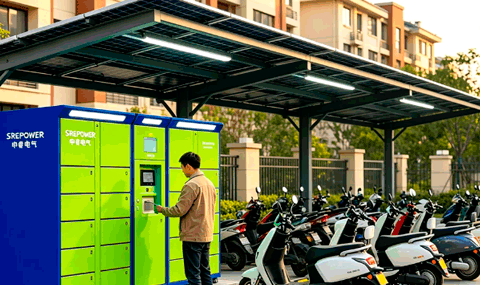
The battery swapping cabinet is compatible with various specifications of batteries, which can meet the needs of different users and promote the development of the battery swapping market. For example, Panzhong Technology's takeaway battery swapping cabinet has strong compatibility, and the same cabinet can be compatible with all specifications of 48V, 60V, and 72V batteries. This enables users of batteries with different voltage specifications to use the battery swapping cabinet, expanding its usage range and attracting more users. At the same time, the compatibility of the battery exchange cabinet has also promoted the development of battery production enterprises. Enterprises can produce batteries of different specifications according to market demand, improving market competitiveness. In addition, the standardization of battery specifications for battery swapping cabinets also contributes to the standardized development of the industry, improving the operational efficiency and safety of the entire swapping industry.
Improvement of user experience
For users, the battery swapping cabinet provides more choices by adapting to multiple specifications of batteries. Users can choose the appropriate battery specifications based on their electric vehicle type, travel needs, and other factors. For example, delivery drivers can choose high-capacity, high-voltage batteries according to their work needs to meet the needs of long-term and long-distance delivery; Ordinary urban residents can choose small capacity, low-voltage batteries for short distance travel. In addition, the intelligent recognition function and separate charging function of the battery swapping cabinet have also improved the user experience. When the user puts the battery into the battery swapping cabinet, the system will automatically recognize the battery specifications and charge it automatically according to the specifications, avoiding the trouble of manually setting charging parameters for the user. The separate charging function allows users to purchase packages of corresponding battery specifications according to their own needs, saving unnecessary expenses.
Hot Keywords:
swap charging station
battery swap station




 WhatsApp Contact
 WhatsApp Contact