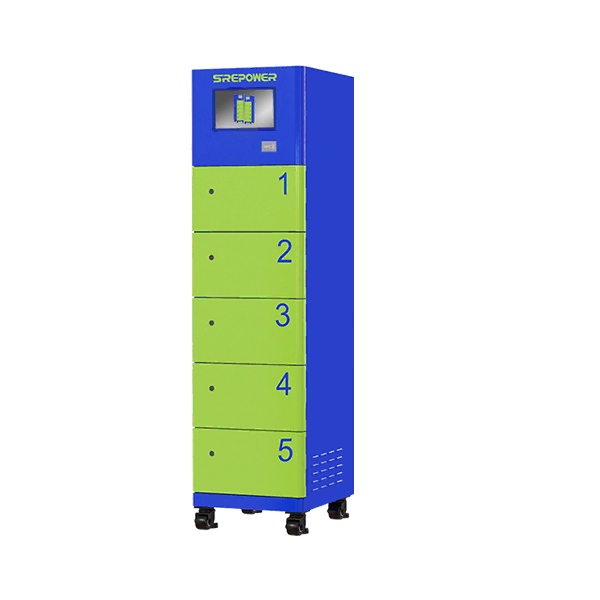
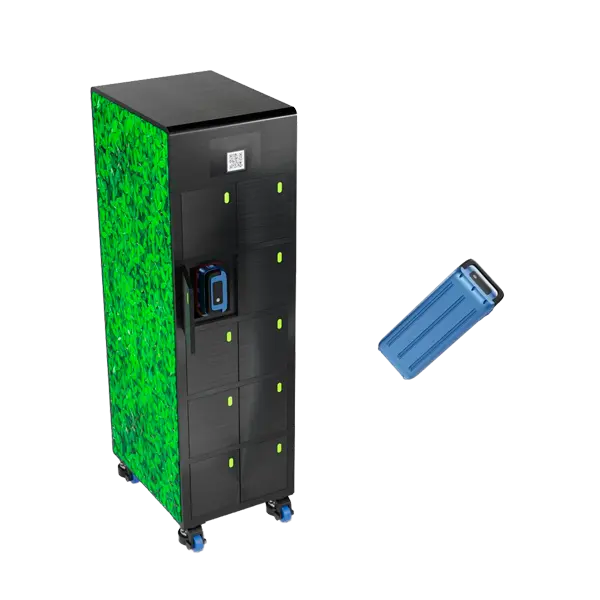
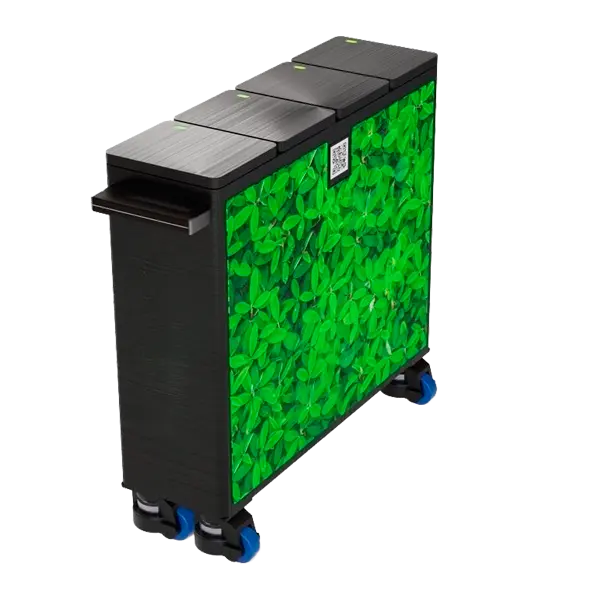
Guide to purchasing takeaway battery swapping cabinets: Don't miss out on these 3 reliable manufacturers!
In recent years, with the rapid development of the food delivery and instant delivery industries, riders' demand for efficient and safe battery power replenishment has been increasing. As the core infrastructure to solve the "battery life anxiety", takeaway battery swapping cabinets are becoming a key layout direction for many operators, platform enterprises, and entrepreneurs. Faced with numerous equipment suppliers in the market, many buyers will ask: which battery swapping cabinet manufacturer is more reliable for purchasing equipment?

At present, reliable companies in this industry include Dunchuang Technology, each with its own advantages and characteristics. But regardless of the brand, what truly determines the value of cooperation is often not fame itself, but whether it can meet the core needs of actual operation. Therefore, when choosing a supplier of battery swapping cabinet equipment, in addition to referring to industry reputation, the following key dimensions should be given special attention.
1、 Is the product truly suitable for local operational scenarios?
The climate, electricity consumption environment, and user habits vary greatly in different cities, and a set of "universal" equipment may not be able to operate stably in all regions. A reliable manufacturer will provide customized recommendations based on your target market, such as strengthening heat dissipation and moisture-proof design in high temperature and high humidity areas, optimizing cabinet size to adapt to narrow spaces in old residential areas, or improving structural strength for high-frequency use areas.
Before making a purchase, why not ask: Have you ever landed a project in a similar area? What is the failure rate of the equipment in extreme weather conditions? These details often speak louder than parameter tables.
2、 Is the system stable and scalable?
The battery swapping cabinet is not only hardware, but also an IoT system. A stable backend management system determines whether you can monitor device status in real-time, remotely handle exceptions, and flexibly adjust billing strategies. In addition, as the business scale expands, whether it supports platform integration, unified management of multiple branches, and open data interfaces also directly affects long-term operational efficiency.
It is recommended to clarify the business plan for the next 6-12 months during the selection stage, and confirm whether the equipment system has sufficient scalability to avoid falling behind after purchase.
3、 Is the equipment durable and can long-term maintenance costs be controlled?
The battery swapping cabinet usually requires 7 × 24 hours of outdoor operation, and exposure to sunlight, rain, frequent switching, and human collisions are all common occurrences. Therefore, the structural material, protection level (such as IP54 or above), and lifespan of the lock control system of the equipment directly affect the failure rate and maintenance expenses in the later stage.
Some low-priced devices have low initial investment, but their cabinet doors are easily damaged, accessories are prone to breakage, and communication modules are unstable, resulting in frequent maintenance or even premature scrapping. And truly reliable equipment will adopt industrial grade standards on key components, although the initial procurement cost is slightly higher, the overall cost throughout the entire lifecycle is actually lower.
When evaluating, it is recommended to focus on understanding the mean time between failures (MTBF) of the equipment, the warranty period of the main components, and whether there is a modular design for easy replacement in the later stage, in order to effectively control long-term operating expenses.
4、 Is the after-sales service response timely?
Even the best equipment is prone to occasional malfunctions. For battery swapping networks that rely on high-frequency usage, "repairing quickly" is often more important than "breaking down less". Therefore, it is essential to understand the manufacturer's after-sales system: does it have a professional service team? How long does it take to respond after a fault is reported for repair? Is the spare parts inventory sufficient?
Although some manufacturers offer attractive prices, they rely on remote guidance or outsourcing for after-sales service. Once there is a problem with the equipment, their operations will be put in a passive position. It is recommended to prioritize selecting partners with a comprehensive service network and a commitment to SLA (Service Level Agreement).
5、 Is the cooperation model flexible?
In addition to equipment procurement, some manufacturers also offer models such as joint operations, hardware sales, and system customization. If you are entering the market for the first time or have limited funds, you can evaluate whether it is necessary to start using a light asset approach. But regardless of the mode, it is necessary to clarify the boundaries of rights and responsibilities - such as who is responsible for equipment loss? Is software upgrade charged? How to define the ownership of data?
Clear cooperation terms are the foundation for long-term win-win outcomes.
Conclusion
Purchasing takeaway battery swapping equipment is essentially choosing a long-term operating partner. Fame is certainly important, but truly reliable manufacturers will provide solid answers in terms of product adaptability, system stability, equipment durability, service guarantee, and cooperation flexibility.
It is recommended to conduct on-site inspections of equipment operation cases before making decisions, communicate real experiences with existing customers, and request detailed technical documents and service commitments. Only by laying a solid foundation can the battery swapping business run more steadily and further.
Hot Keywords:
swap charging station
battery swap station




 WhatsApp Contact
 WhatsApp Contact