Language
French PortugalSpain
> News > Industry News > How about doing a two wheeled electric vehicle battery swapping project abroad.
Industry News | 2026.10.10

How about doing a two wheeled electric vehicle battery swapping project abroad.

How about doing a two wheeled electric vehicle battery swapping project abroad.


Southeast Asia and Africa have seen a surge in demand for riders. How about developing two wheeled electric vehicle battery swapping projects abroad? This question cannot be simply answered with "good" or "not good". The demand is real, but the difficulty of implementation is also not low. A more prudent judgment is that it has long-term value, but is suitable for teams with preparation, funding, and localization capabilities to enter.


From the demand side, Southeast Asia and Africa have a large number of two wheeled electric vehicles and motorcycles, and high-frequency travel scenarios such as food delivery, same city delivery, and motorcycles are concentrated. For riders, long waiting times for charging, insufficient home charging conditions, and fluctuating fuel costs can all affect order efficiency. The battery swapping mode compresses the energy replenishment time to a few minutes, and the separation of the vehicle and electricity can also lower the threshold for one-time purchase, making it more easily accepted by commercial riders.

From the supply side, domestic battery swapping equipment, batteries, and operational systems are already relatively mature. If overseas projects only focus on exporting equipment, the threshold is relatively low; If a complete solution of "vehicle+battery+battery exchange cabinet+operation system" is developed, the commercial space will be more complete, but it will also require a longer investment cycle.

The four questions that truly determine the success or failure of a project.

Firstly, whether local policies allow it. There are significant differences in the requirements for batteries, electrical safety, vehicle registration, foreign investment, and data compliance among different countries, and some markets require certification in advance.

Secondly, whether the power and site are stable. Due to limited power grid conditions in some regions of Africa and Southeast Asia, it may be necessary to consider supporting facilities such as photovoltaics and energy storage for battery swapping cabinets; The site selection should also take into account the density of riders, power access, and security conditions.

Thirdly, whether the product is suitable for local use. The battery specifications, interface standards, cabinet protection, heat dissipation and moisture prevention, language interface, and payment methods cannot be directly copied from domestic experience.

Fourthly, whether the funding and operations can be sustained. The early stage of a battery swapping project requires investment in vehicles, batteries, equipment, and maintenance teams, and the payback period is usually not very short. Only when the vehicle density, battery replacement frequency, and payment habits reach a certain level can the station generate stable revenue.

For companies preparing to enter the market, they can first pilot from a single city and a single rider group, such as food delivery riders, motorcycle fleets, or logistics fleets. Firstly, verify the service radius, frequency of battery replacement, pricing model, and operation and maintenance costs for a single cabinet, and then gradually expand the site network. Compared to blindly laying equipment, small-scale running models are more critical.

Overall, the battery swapping of two wheeled electric vehicles in Southeast Asia and Africa is not a short-term quick money making project, but an infrastructure based business aimed at high-frequency travel scenarios. Opportunities do exist, but it is necessary to think clearly about compliance, products, funding, and local operations. For enterprises with supply chain and operational capabilities, overseas car rental and battery swapping are worth exploring; For teams lacking research and funding preparation, it is not advisable to rush in.
Hot Keywords: swap charging station battery swap station

The value of intelligent battery swapping cabinets in travel services.

With the continuous development of urban transportation and people's pursuit of travel convenience, intelligent battery swapping cabinets,

2026-04-03 Learn More
The value of intelligent battery swapping cabinets in travel services.

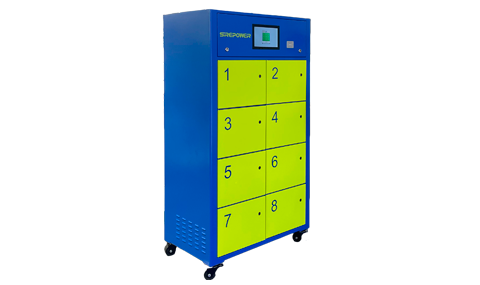
What is the difference between a charging cabinet and a battery swapping cabinet?

The charging cabinet is used by users to charge their own batteries. They need to unplug their own batteries, put them in the cabinet,

2025-03-21 Learn More
What is the difference between a charging cabinet and a battery swapping cabinet?

In which scenarios is the battery swapping cabinet suitable for use?

In order to solve the pain points of electric vehicle charging and endurance, efficient and convenient shared battery swapping cabinets have emerged.

2025-03-21 Learn More
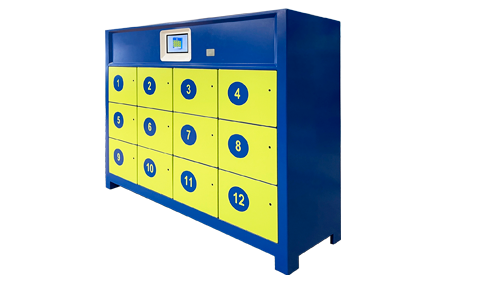
In which scenarios is the battery swapping cabinet suitable for use?

How is the standardization progress of current battery swapping cabinets.

At present, the standardization progress of battery swapping cabinets is steadily advancing, and a series of specific standardization plans or standards will be introduced in the future to promote the standardized development of the industry.

2025-03-20 Learn More
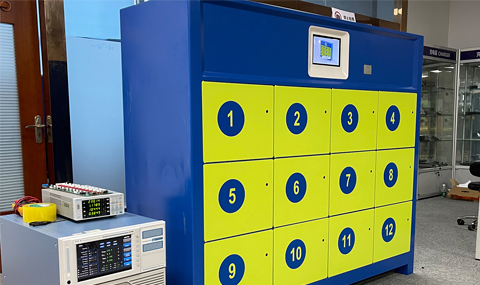
How is the standardization progress of current battery swapping cabinets.

What are the benefits of installing electric bicycle charging cabinets and charging stations.

The number of electric bicycles is increasing, and how to safely and conveniently charge them is a problem for many people.

2025-03-20 Learn More
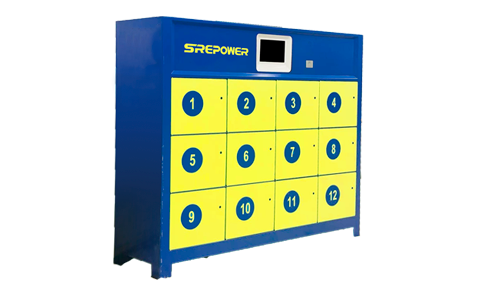
What are the benefits of installing electric bicycle charging cabinets and charging stations.

How to solve the charging problem of shared electric bicycles on the streets?

In recent years, shared electric bicycles, as an emerging green mode of transportation, have quickly emerged as a new favorite in the urban short distance travel market due to their convenience,

2025-03-19 Learn More
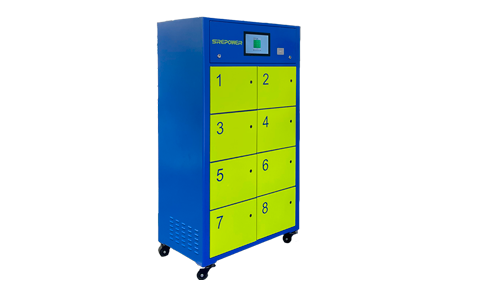

How to solve the charging problem of shared electric bicycles on the streets?
china ev charging companies-SRE Power
Follow us tiktok Linkedin Youtube facebook
Contact Us

Address:1001, Building T4, Haiku Technology Building, Bao'an District, Shenzhen, Guangdong, China.

Phone:+86-0755-23057134

E-mail:Info@srepowerne.com

SRE Power WhatsAppWhatsApp Contact SRE Power WhatsAppWhatsApp Contact

Copyright @ China ev fast charging manufacturers&companies&suppliers&vendor&provider- SRE Power