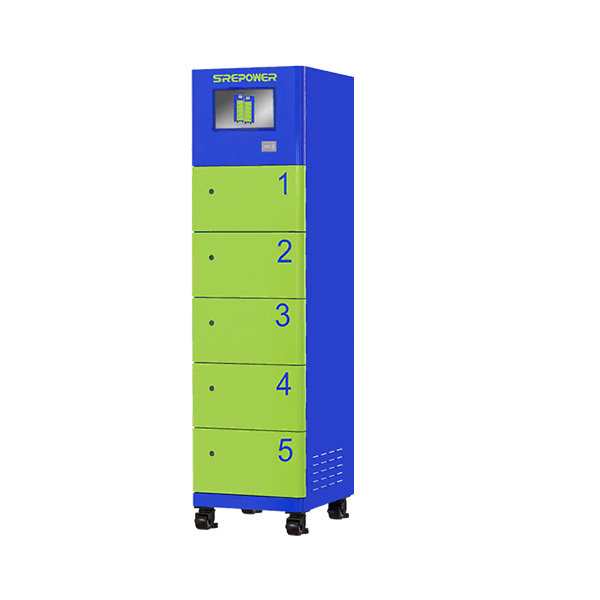
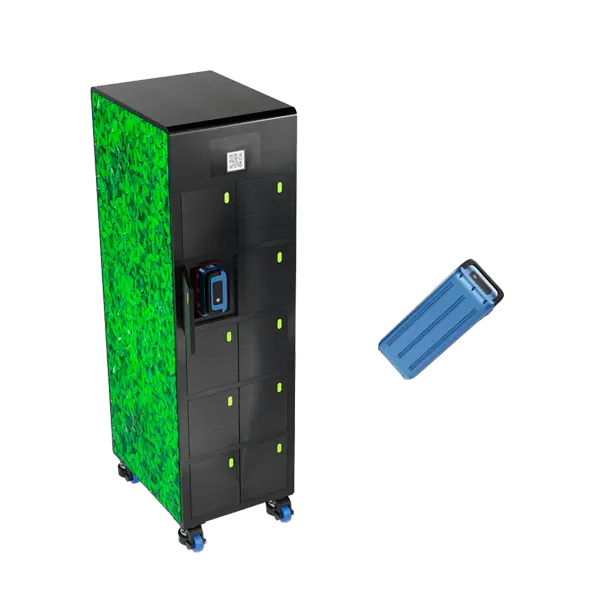
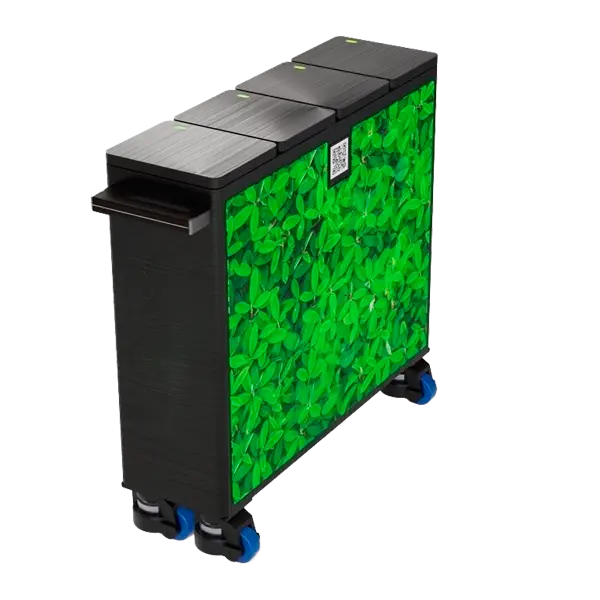
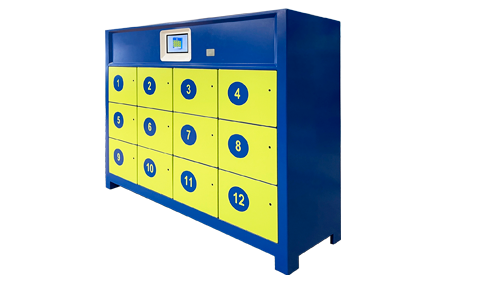
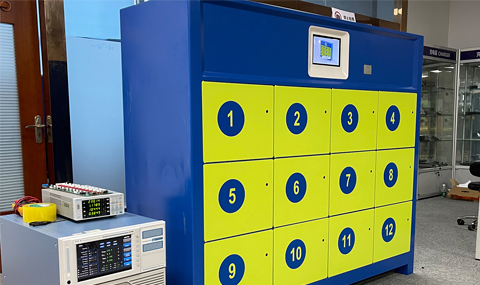
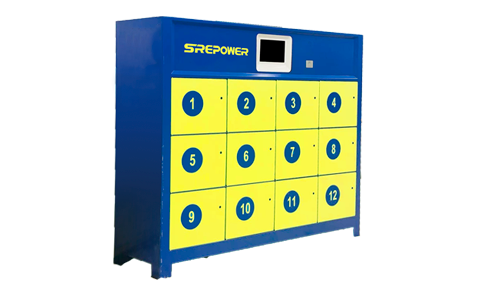
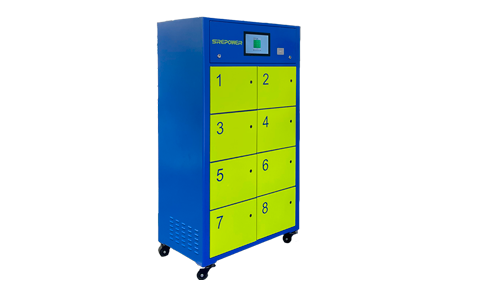
How to choose a cost-effective battery swapping cabinet for beginners?
When choosing a suitable battery swapping cabinet, it is important to choose a manufacturer with strong capabilities. The core should revolve around four dimensions: business scenarios, cost budgets, technical requirements, and long-term operation and maintenance capabilities. Avoid blindly pursuing "big brands" and match them with highly adaptable partners.
The following is a step-by-step selection guide:
1、 Clarify your core needs (first step in selection)
The requirements for switching cabinets vary greatly in different scenarios. First, clarify your positioning:
If the target scenario is for food delivery riders to replace their batteries, priority should be given to manufacturers with fast battery replacement speed, large cabinet capacity, and support for 24-hour unmanned operation. They should be compatible with mainstream lithium batteries on the market. If you want to do community shared battery swapping: focus on small footprint, accurate intelligent billing, support for remote management, and preferably connect with the community property management system. If you want to replace a three wheeled truck/low-speed vehicle, focus on the load-bearing capacity of the cabinet, strong battery compatibility, and high protection level (to cope with complex outdoor environments).
Business scale start-up small batch: Choose manufacturers that support customization, short delivery cycles, and fast after-sales response to reduce trial and error costs. Large scale centralized procurement: Priority should be given to manufacturers with production bases, stable production capacity, and the ability to provide full chain operation solutions to ensure supply capacity.
Initial investment in cost budget control: Focus on manufacturers with high cost-effectiveness and support for integrated leasing and sales to avoid one-time large expenditures. Value long-term returns: Choose manufacturers with low battery loss, low operation and maintenance costs, and the ability to provide data-driven operational support to enhance profitability.
2、 Assessing the core hard power of manufacturers (key screening dimensions)
Technology and product quality and safety protection: The key is to check whether there is overcharge and over discharge protection, intelligent temperature control, independent fire compartment, IP54 and above protection level, which are the safety bottom line of outdoor battery swapping cabinets. Compatibility: Whether it supports multiple specifications of lithium batteries and whether it can adapt to different brands of battery protection boards (such as Bo Guan Technology's lithium battery protection board, which can be confirmed in advance for compatibility). Intelligence level: Whether it supports remote monitoring, fault warning, and data statistics (battery replacement frequency/battery health), the level of intelligence directly affects the efficiency of later operation and maintenance.
Verify whether the manufacturer has its own production base for production and delivery capabilities to avoid quality instability caused by OEM manufacturing; Confirm monthly production capacity and delivery cycle, especially for large-scale procurement, to prevent supply delays from affecting business progress.
Qualification certification must have 3C certification and ISO9001 quality management system certification. Export business also needs to correspond to national certification standards, and manufacturers with incomplete qualifications are strictly excluded.
3、 Evaluate the service and operation capabilities of manufacturers (key to long-term cooperation)
Can pre-sales services provide free site survey, scheme design, and prototype testing? A professional pre-sales team can help you avoid issues such as venue adaptation and power access.
After sales service response time: Does it support 24-hour emergency maintenance? Are there service outlets in remote areas? Maintenance policy: Does it include free warranty period, regular inspections, and discounts on parts replacement?
Can operational support provide operational training, data analysis support, and market expansion recommendations? Especially for start-up teams, the operational empowerment of manufacturers greatly reduces the difficulty of getting started.
4、 Field investigation and reputation verification (the final step to avoid pitfalls)
On site factory inspection: If conditions permit, it is necessary to conduct on-site inspections at the manufacturer's production base, check the production line, quality inspection process, and inventory situation, and intuitively judge the strength.
Reference landing case: Request manufacturers to provide cooperation cases in the same scenario, preferably by contacting existing customers to understand the stability of the product in actual use and the speed of after-sales response.
Market reputation research: Through industry exhibitions, supplier platforms, peer recommendations, and other channels, understand the market reputation of manufacturers and avoid brands with high complaint rates and negative reviews.
5、 Notes on Contract Signing
Clearly define product specifications, warranty period, delivery time, and payment method to avoid vague terms.
Agree on after-sales response time, fault handling process, and parts supply guarantee to reduce the risk of disputes in the later stage.
If customized development is involved, it is necessary to clarify the development cycle, acceptance criteria, and post upgrade and maintenance costs.
Hot Keywords:
swap charging station
battery swap station




 WhatsApp Contact
 WhatsApp Contact