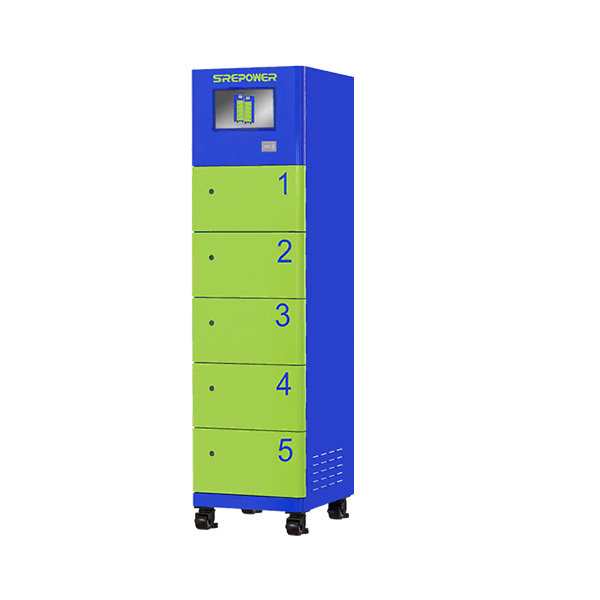
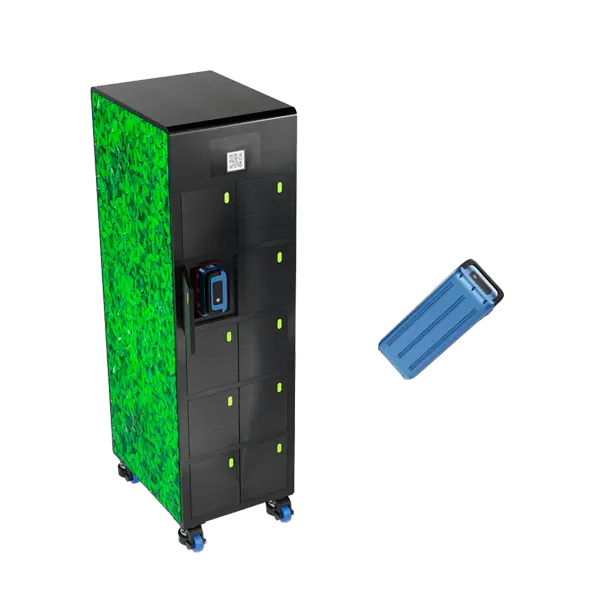
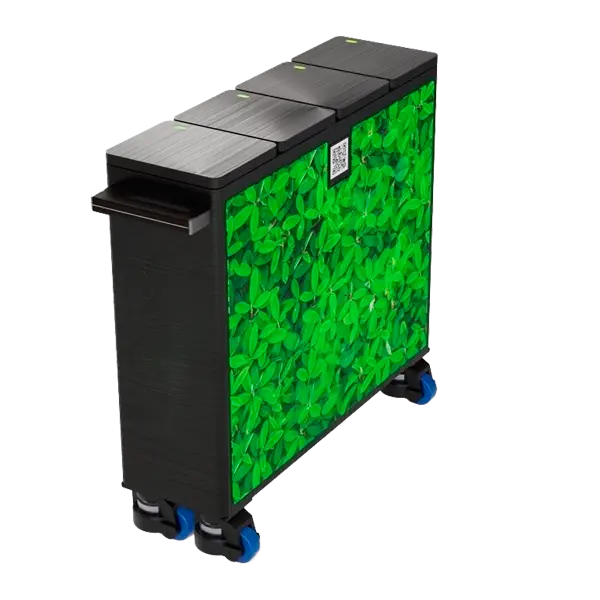
Is the battery swapping cabinet compatible with multiple lithium batteries?
The standardized battery swapping cabinet on the market has good battery compatibility and can be connected to multiple power lithium battery products that meet industry standard dimensions, communication protocols, and voltage specifications. The device is equipped with an adaptive recognition module, which automatically reads the BMS management chip data of the battery after power on, completes voltage, internal resistance, and communication verification, and matches two mainstream lithium battery systems: ternary lithium and lithium iron phosphate. At the same time, the system is equipped with a safety threshold control mechanism, which monitors charging conditions in real time while being compatible with multiple batteries, avoiding operational risks caused by parameter discrepancies, and balancing universality and safety of use.
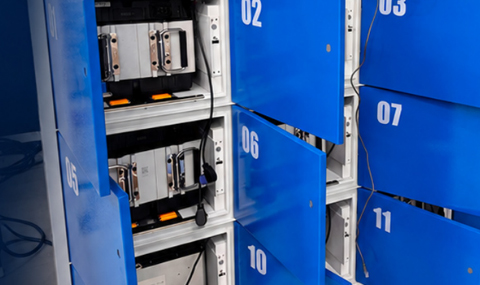
Introduction to compatibility of multiple lithium batteries in battery swapping cabinets
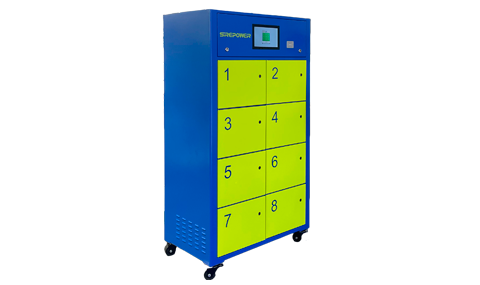
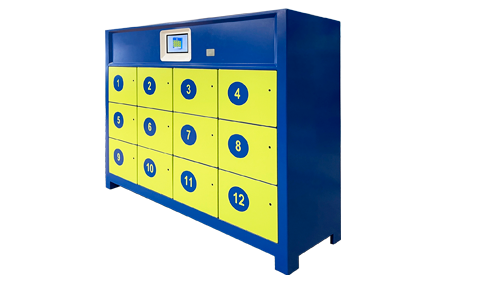
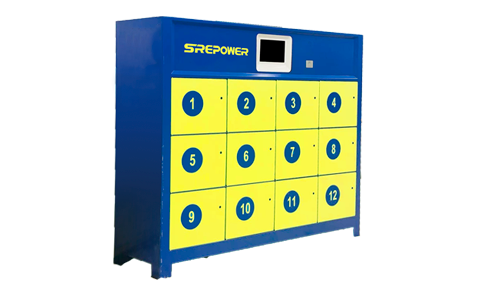
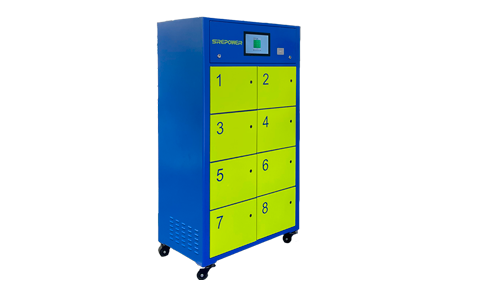
The Bessel battery swapping cabinet has strong broad-spectrum lithium battery compatibility and can adapt to the vast majority of two wheeled electric vehicle power batteries on the market, effectively solving the pain points of traditional battery swapping cabinets with single battery adaptation and poor universality.
In terms of battery types, the device is compatible with both ternary lithium batteries and lithium iron phosphate batteries in both directions. The system can automatically identify the cell type, match exclusive charging strategies and protection logic, and adapt to the charging and discharging characteristics of different cells. At the voltage adaptation level, the battery swapping cabinet fully covers mainstream battery voltage specifications such as 48V, 60V, and 72V in the industry, supporting equipment to automatically identify voltage and charge according to the corresponding voltage. The capacity adaptation range is wide, and the standard compartment is compatible with lithium batteries with capacity specifications ranging from 20Ah to 60Ah. If the capacity is higher, it can be customized according to the battery size, relying on an intelligent BMS analysis system to dynamically adjust the charging power. At the same time, the device is equipped with multiple safety monitoring mechanisms, which can monitor core data such as battery temperature, current, and internal resistance in real-time on the basis of compatibility with multiple specifications of batteries, balancing universality and operational safety.
Unified access of multi specification stock batteries by the operator
A delivery operation customer in Harbin has been operating their own battery assets for a long time, with inventory including three different voltage and capacity lithium battery products: 60V45Ah, 72V50Ah, and 72V60Ah. The battery system is mixed, with both hardware version batteries without data interaction and intelligent software version batteries equipped with BMS communication protocol. The customer compared multiple cabinet products on the market in the early stage, and found that most devices only support a single voltage and are only compatible with communication batteries. Existing hardware batteries cannot be used on the machine, and if the batteries are modified, it will incur high modification costs.
After on-site testing and comparison, the customer ultimately chose Bessel battery swapping equipment. The voltage output range of the cabinet covers 60V-72V and can adaptively match batteries in the range of 45Ah~60Ah. It automatically matches the charging power curve based on the cell capacity; The system is equipped with a dual-mode recognition mechanism, and the communication battery reads BMS data to finely control the charging process. The non communication hardware battery relies on voltage and internal resistance sampling to achieve safe charging, and is compatible with two types of batteries: ternary lithium and lithium iron phosphate.
The entire solution does not require customers to modify the existing batteries, activating all existing assets. One cabinet can carry all battery rotation operations, reducing the dual costs of equipment batch procurement and battery rectification. Since its operation, the charging is stable, the protection mechanism is sensitive, and the efficiency of site battery replacement operation has been significantly improved.
Customer feedback: Having a variety of battery models in hand is already a headache. When other cabinets choose batteries, Bessel is fully compatible with old batteries without the need for additional investment in battery modification, making operation and maintenance much easier.
Core considerations for purchasing battery swapping cabinets compatible with multiple specifications of lithium batteries
When purchasing a battery replacement cabinet, battery compatibility is the core evaluation indicator, and it is necessary to focus on avoiding the problem of single equipment adaptation and the inability to reuse existing batteries.
Firstly, it is necessary to confirm the voltage and capacity adaptation range of the equipment, whether it can cover mainstream voltage specifications such as 48V, 60V, and 72V, and whether it is compatible with lithium batteries with different capacity gradients, supporting system adaptation.
Secondly, it is important to focus on verifying the battery communication adaptation capability. High quality battery swapping cabinets should support both software version batteries with BMS communication and hardware version batteries without communication, adapting to different old and new existing batteries.
In addition, the device needs to be compatible with the two mainstream battery cells of ternary lithium and lithium iron phosphate, and can automatically match the charging curve and protection logic of different battery cells. Finally, compatibility and safety must be taken into account, and the equipment should be equipped with real-time current, temperature, and internal resistance monitoring functions. While adapting to multiple specifications of batteries, the risk of abnormal charging should be eliminated, all existing battery assets should be activated, and renovation and procurement costs should be reduced.
Hot Keywords:
swap charging station
battery swap station




 WhatsApp Contact
 WhatsApp Contact