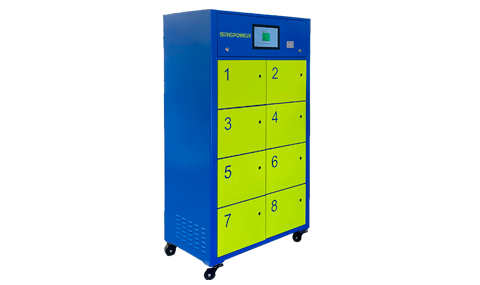
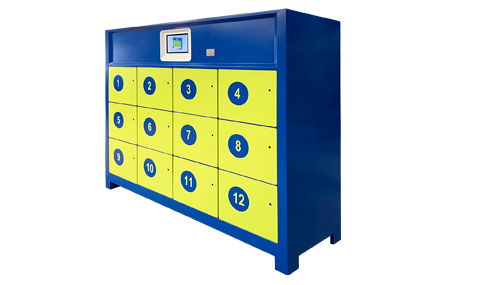
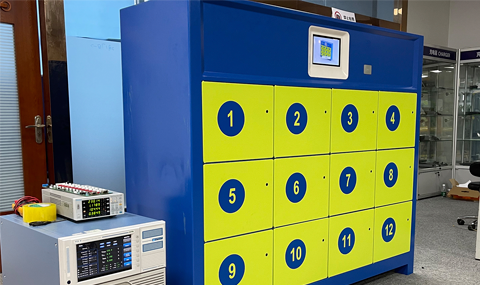
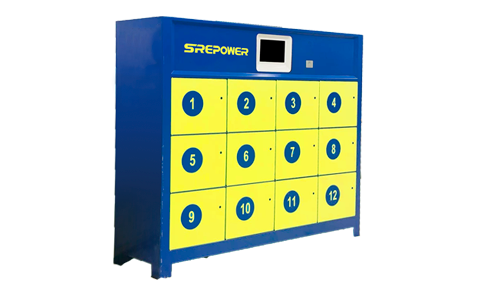
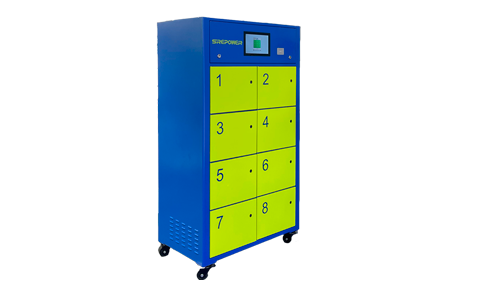
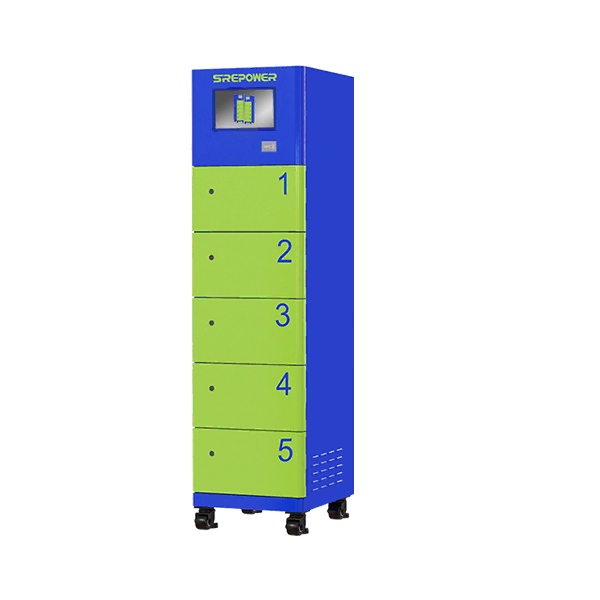
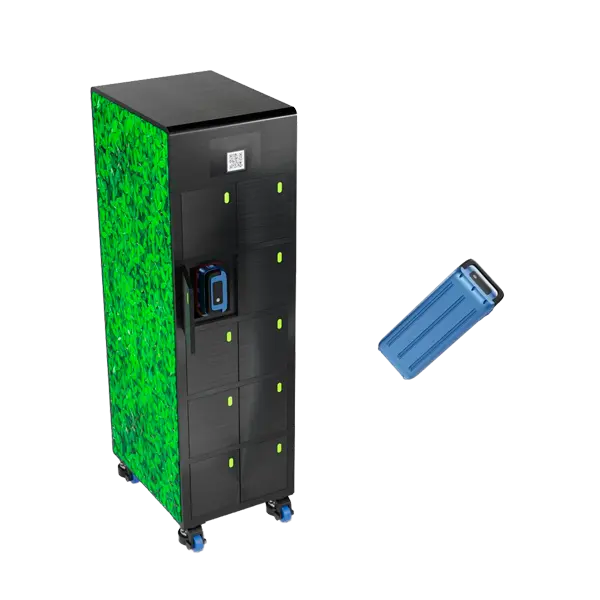
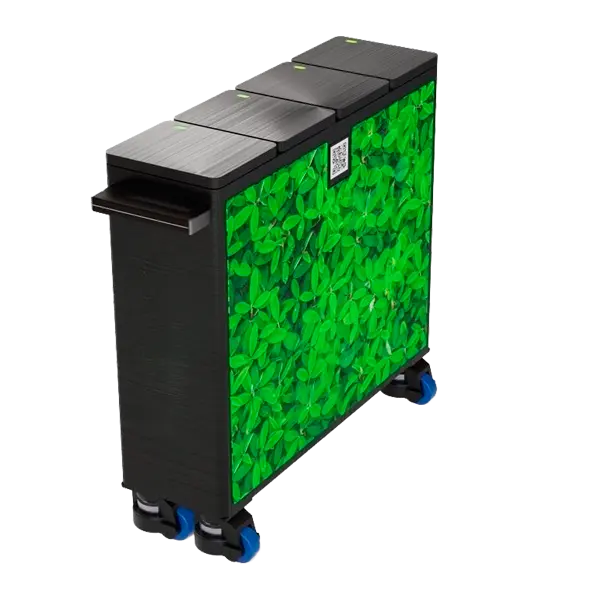
What is the development prospect of battery swapping cabinets?
In recent years, with the rapid development of instant delivery industries such as food delivery and errand running, riders wearing various uniforms can be seen everywhere on the streets of cities. They race against time, shuttling through the streets and alleys, just to deliver meals or packages to users on time. But you may not have noticed: behind these riders, a new industry is quietly emerging - battery swapping cabinets.

So, what is the development prospect of the rider battery swapping cabinet? Is it really as' huge potential 'as someone said? Today, let's clarify this matter in the simplest way possible.
1、 Why do riders need to change their electrical cabinets?
Most delivery riders use electric vehicles powered by lithium batteries. A fully charged battery can run about 60-80 kilometers, while a full-time rider often has to run over 150 kilometers a day. This means that you need to charge at least twice a day.
But the problem arises:
Charging at home is too slow (4-6 hours), which delays receiving orders;
Private wire charging poses safety hazards and has been banned in many residential areas;
The cost of bringing multiple batteries is high (a good battery costs over 3000 yuan).
So, the "replacement charging" model emerged - riders only need to spend a few yuan and can replace a fully charged battery in the battery swapping cabinet in just a few seconds, and immediately continue running orders. Time saving, safe, and efficient.
2、 What is the market demand?
The answer is simple: the more riders there are, the greater the demand.
According to public data, the number of food delivery riders in China has exceeded 10 million and is continuing to grow. Only Meituan and Ele.me platforms have over 2 million daily active riders. Assuming half of them use battery swapping services and rent 200 yuan per person per month, the monthly rental income alone would be over 100 million yuan, and the annual market size could easily exceed 2 billion yuan.
More importantly, this demand is rigid - as long as the food delivery industry exists, riders need electricity support. With the expansion of new businesses such as instant retail and same city delivery, the number of riders will only increase in the future.
3、 Policies are also being pushed forward
In recent years, the country has vigorously promoted the construction of green travel and smart city infrastructure. Many local governments explicitly encourage the "shared battery swapping" model and include it in the category of urban new infrastructure. for example
Beijing, Shanghai, Shenzhen and other places have introduced policies to support the use of battery swapping cabinets in communities and commercial districts;
The fire department also recognizes the safety of centralized battery swapping cabinets, which are more controllable compared to private charging.
The dual wheel drive of policy and market has put the battery swapping cabinet industry on the forefront.
4、 Clear business model and predictable profitability
The profit model of battery swapping cabinets is not complicated:
Monthly fee: Riders can enjoy unlimited battery swapping by paying rent every month;
Member subscription: Monthly or yearly packages to increase user stickiness;
Advertising and data services: The cabinet can be used for local advertising, and the backend can also accumulate operational data.
The cost of a battery replacement cabinet is about 50000 to 80000 yuan. If the battery is replaced 30 times a day, it can be recouped in about a year. In areas with high rider density, returns are faster.
At present, there are mature brands such as "e-Swap", "Hello Swap", and "Xiaoha Swap" in the market, and many places have also begun to see local operators joining and cooperating, with the threshold being lowered.
5、 There is still greater potential in the future
Don't just focus on delivery riders. In the future, scenarios such as delivery drivers, shared electric bicycles, and community short distance logistics may all become new users of battery swapping cabinets. Even experts predict that by 2030, the market size of two wheeler battery swapping will exceed 100 billion yuan.
More importantly, with the advancement of battery standardization and the upgrading of intelligent management technology, battery swapping networks will become increasingly efficient, affordable, and popular. Just like today's charging stations, battery swapping cabinets are likely to become the "power refueling stations" in cities.
Conclusion
Ultimately, the rider battery swapping cabinet is not a "cool" concept, but rather an infrastructure that solves practical problems. It is not supported by storytelling, but by the thousands of real battery swapping needs every day.
So, how strong is its prospect?
Not 'possibly erupting', but already on the way; It's not about 'whether there is a chance', but who lays out first and benefits first.
For riders, it is an efficiency tool;
For investors, it is a stable track;
For cities, it is green infrastructure.
The future has arrived, but many people have not yet seen it.
Hot Keywords:
Fast Swap Cabinet Manufacturer
swap charging station
battery swap station