Guidelines for Free Site Selection and Evaluation of Battery Swap Cabinets.
Today, with the increasing popularity of electric bicycles, battery swapping cabinets, as a convenient energy supplement facility, are gradually becoming an important component of urban infrastructure. However, the location of the battery swapping cabinet is crucial, as it not only affects the user experience but also impacts operational efficiency and safety. This article will provide you with a comprehensive guide for free site selection and evaluation of battery swapping cabinets, helping you scientifically and reasonably choose the installation location of battery swapping cabinets.
1、 Understand user needs and market potential
Analyze the target user group
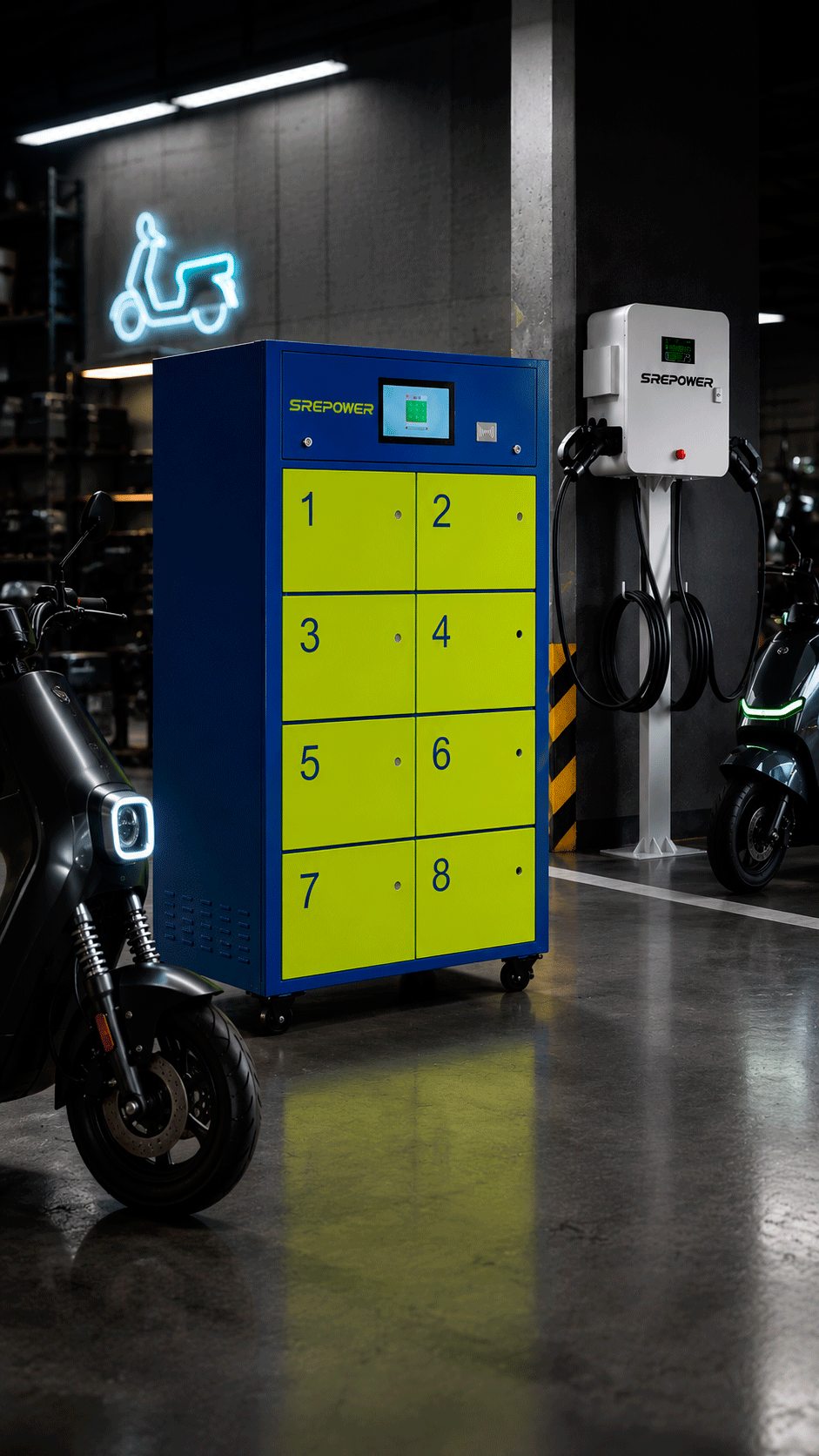
The main users of battery swapping cabinets include delivery riders and residential users. Express delivery riders have a long daily cycling distance and a high frequency of battery replacement. They usually hope that the battery replacement cabinet can be located near their work areas, such as commercial districts, office buildings, and food delivery stations, so that they can quickly replace the battery during delivery and reduce time loss. Residential users, on the other hand, place greater emphasis on the convenience and safety of battery swapping, and hope that battery swapping cabinets can be installed near residential areas with shorter walking distances.
Assess the scale of market demand
Before selecting a site, it is necessary to conduct detailed research on the local electric bicycle ownership, usage frequency, and battery replacement needs. By collaborating with local courier and food delivery companies, we can understand the distribution of riders and their demand for battery swapping; It is also possible to understand the usage intentions and needs of resident users through questionnaire surveys, on-site interviews, and other methods. In addition, local urban planning and development trends can also be referenced to predict the future growth of electric bicycles, in order to provide more accurate basis for the layout of battery swapping cabinets.
2、 Following the principles of scientific planning and site selection
Consider battery swapping application scenarios
The location of the battery swapping cabinet should be planned and arranged in a unified and reasonable manner, taking into account the parking space for electric bicycles and the needs of users. Generally speaking, priority should be given to installing in outdoor open spaces, making full use of streets, alleys, and scattered plots for additional densification. For example, you can choose places where it is convenient for delivery riders and residential users to change their electricity, such as near community gates or by roadside parks. At the same time, it is necessary to ensure that the power exchange cabinet does not occupy or affect the passage function of the sidewalk and tactile paving, and maintain a certain fireproof distance from the building to ensure the safety of use.
Meet the requirements of urban landscape
The construction of battery swapping cabinets should be coordinated with urban landscape work to avoid adverse effects on the urban environment. When selecting a site, the appearance design and color matching of the battery swapping cabinet should be considered to blend in with the surrounding environment. In addition, attention should be paid to the placement of the battery swapping cabinet to avoid affecting the overall beauty and image of the city.
Incorporate into urban infrastructure planning
Encourage the construction of battery swapping cabinets to be included in the overall planning and construction of urban infrastructure, which can better coordinate resources from all parties and improve the efficiency and quality of battery swapping cabinet construction. When communicating with the urban planning department, detailed site selection plans and construction plans should be provided to seek their support and recognition.
3、 Pay attention to the safety factors of site selection
Maintain a safe distance from hazardous areas
The power exchange cabinet should not be placed in low-lying areas or near rainwater pipes or rivers in buildings to prevent damage caused by accumulated water. At the same time, it is necessary to maintain a safe distance from important municipal facilities such as sewage, tap water, and electricity to avoid the impact of accidents on these facilities. In addition, the battery exchange cabinet should be kept at a safe distance from high-temperature, flammable and explosive places, factories and warehouses with fire hazards of Class A and B, gas filling stations, gas pipelines, buildings with combustible external insulation materials, etc., to ensure safe use.
Does not affect evacuation routes and fire lanes
The installation of the battery swapping cabinet shall not occupy evacuation routes, fire lanes, and fire truck high-altitude operation sites to avoid affecting personnel evacuation and fire rescue work in emergency situations. When selecting a site, it is necessary to strictly follow the relevant fire safety standards and regulations to ensure that the installation location of the transformer cabinet meets fire safety requirements.
Avoid storing dangerous goods around
The area around the battery exchange cabinet should be kept clean, and flammable, explosive, hazardous chemicals, and other materials should not be stored. Regularly inspect and clean the environment around the transformer cabinet to promptly eliminate safety hazards.
4、 Pay attention to the convenience of site selection
Close to traffic nodes
The battery swapping cabinet should be located in a conveniently accessible area with easy parking in the surrounding area, making it convenient for users to quickly reach and replace the battery. For example, you can choose to be near crowded areas such as subway stations, bus stations, train stations, as well as locations next to main roads and parking lots. This can attract more users to use the battery swapping cabinet and improve its utilization rate.
Meet the walking distance requirements
For residential users, the walking distance of the battery swapping cabinet should not be too long and should generally be controlled within 5 minutes. Therefore, when selecting a site, priority should be given to layout in densely populated areas with electric vehicles such as residential areas and industrial parks, to ensure that users can easily and quickly reach the battery swapping cabinet.
Optimize the design of the flow line
The cabinet should be placed on the courier unloading line, such as within 50 meters of the community gate, to avoid packages being thrown to the post station due to inconvenient operation. At the same time, the operation process and user experience of the battery swapping cabinet should be considered, and the layout and entrances and exits of the cabinet should be designed reasonably to make the battery swapping process smoother and more efficient.
5、 Ensure the compliance of site selection
Comply with laws and regulations
The installation and use of the battery swapping cabinet must comply with relevant national laws, regulations, and standard specifications, such as the Electricity Law, Civil Code, Electric Bicycle Centralized Charging Facilities Part 1: Technical Specifications (GB/T42236.1), etc. Before installation, it is necessary to consult the power department and handle relevant procedures to ensure that the power connection of the transformer cabinet meets the requirements. At the same time, we should respect the rights and interests of other property owners and avoid issues such as noise and road occupation.
Comply with local management regulations
In addition to national laws and regulations, various regions may also introduce local management regulations and policies, such as construction standards, approval processes, and operational management for battery swapping cabinets. When selecting a site, it is necessary to have a detailed understanding of local regulations and strictly follow the requirements to ensure that the construction and operation of the battery swapping cabinet are legal and compliant.
6、 Balancing environmental coordination
Integration of appearance and environment
The appearance design of the battery swapping cabinet should be coordinated with the surrounding environment to avoid being too abrupt. Suitable colors, materials, and shapes can be selected according to different installation locations and environmental characteristics, so that the battery exchange cabinet can blend into the surrounding landscape and architectural style. For example, the installation of battery exchange cabinets in the community can choose an appearance similar to the color of the community building, or use some creative design elements to increase the aesthetics of the battery exchange cabinets.
Consider climate factors
In humid or extremely cold regions, the battery swapping cabinet should be installed indoors or equipped with rain and snow prevention facilities to protect the battery and equipment from the impact of adverse weather conditions. At the same time, ventilation and heat dissipation issues should be considered for the battery replacement cabinet to ensure that the battery operates in a suitable temperature and humidity environment, thereby extending its service life.
Reserve equipment maintenance space
The location of the battery swapping cabinet should also consider the needs for equipment replacement, repair, and maintenance, and reserve sufficient space. Generally speaking, the front-end projection space should not be less than 1000mm, so that staff can easily operate it. In addition, it is necessary to ensure that there are sufficient passages around the battery swapping cabinet for the transportation and installation of equipment.
In short, the free site selection evaluation of battery swapping cabinets is a complex and important task that requires comprehensive consideration of multiple factors such as user needs, scientific planning, safety factors, convenience, compliance, and environmental coordination. Only through comprehensive and meticulous evaluation and analysis can the most suitable installation location be selected, providing users with more convenient, safe, and efficient battery swapping services, while also providing strong support for the operation and management of battery swapping cabinets.
Hot Keywords:
swap charging station
battery swap station




 WhatsApp Contact
 WhatsApp Contact
