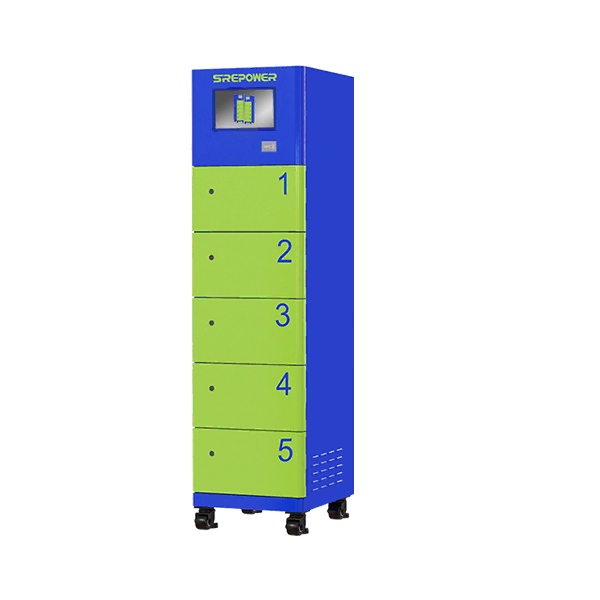
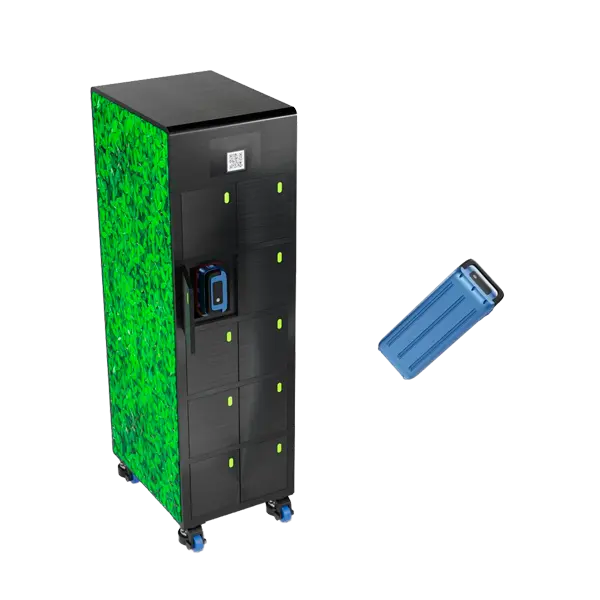
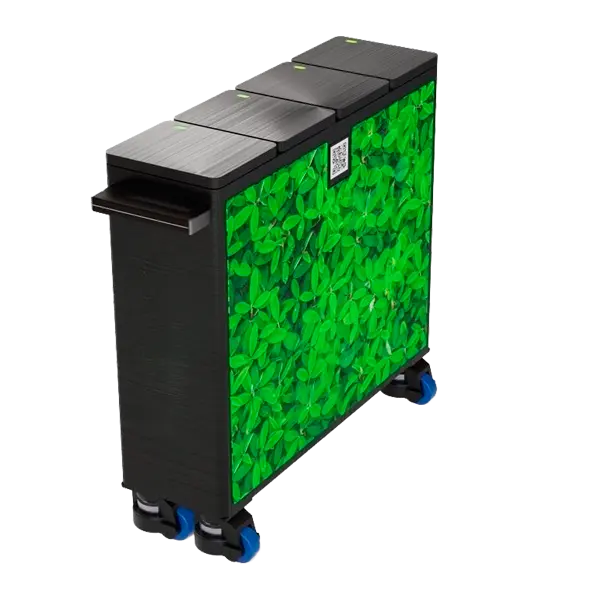
How to determine whether the system of the battery swapping cabinet manufacturer is truly safe and reliable?
In recent years, with the rapid development of the food delivery industry, battery swapping cabinets, as a fundamental infrastructure for riders, have been widely deployed in major cities across the country. For platforms, operators, and investors, choosing a reliable battery swapping cabinet manufacturer is crucial. One of the core considerations is "system security".

However, many people have a vague understanding of "system security" - it not only refers to whether the equipment will malfunction, but also concerns whether the data is reliable, the operation is controllable, and the service is stable. So, how can enterprises and investors judge whether the system of a battery swapping cabinet manufacturer is truly secure? Actually, it does not require advanced technology; one only needs to focus on the following key points.
1. Check whether the system has a complete identity verification mechanism
The battery swapping cabinet is not a public storage locker. Every time the cabinet is opened and batteries are swapped, user identity and operation records are involved. A secure system must be able to accurately identify who is using it, when it is being used, and what operations are being performed.
This means:
Users need to pass real-name authentication (such as phone number + verification code, face recognition, etc.) before they can use it;
Each operation is logged clearly, traceable, and tamper-proof;
Abnormal logins or frequent failed operations will trigger an alert or locking mechanism.
If the manufacturer cannot even complete basic identity verification, then the system is equivalent to having its "doors wide open", posing significant security risks.
II. Check whether data transmission and storage are encrypted
The battery swapping cabinet generates a large amount of data every day: user information, usage time, equipment status, transaction records, etc. Once these data are leaked, it can affect user experience at the very least, and at worst, it can pose privacy risks or even be maliciously exploited.
Secure manufacturers will adopt encryption measures in both "transmission" and "storage" of data:
When data is transmitted from the cabinet to the backend server, HTTPS or other secure protocols are used;
Sensitive information (such as phone numbers and operation records) in the backend database will not be stored in plaintext;
Regularly conduct security audits to prevent unauthorized access by internal personnel.
You can directly ask the manufacturer, "What is your data encryption standard?" If the answer is vague or irrelevant, it should raise a red flag.
Third, check whether the system has emergency response capability
Even the most perfect system may encounter unexpected situations, such as network interruptions, equipment anomalies, and human sabotage. The key lies in whether the system can quickly detect and respond to problems.
A mature battery swapping cabinet system typically features:
Real-time monitoring function, capable of automatically detecting situations such as equipment offline and abnormal opening of cabinet doors;
An automatic alarm mechanism that promptly notifies operation and maintenance personnel;
An alternative solution, such as locally caching operation records, automatically synchronizes them once the network is restored, thereby preventing data loss.
If the manufacturer can only "deal with issues after the fact" and is unable to provide early warnings or respond quickly, it is easy to cause service disruptions or management chaos in actual operations.
IV. Check whether permission management is clear and standardized
Many battery swapping cabinets are designed for multi-role use: riders, operation and maintenance personnel, regional managers, headquarters administrators... Different roles should have different operational permissions.
A secure system will achieve the following:
The permission hierarchy is clear. For example, ordinary riders can only open their own lockers and cannot view others' records;
Administrator operations require secondary verification, and important operations (such as deleting data and modifying configurations) should leave traces;
After an employee leaves or changes positions, their permissions can be promptly revoked.
If all accounts can be "viewed and modified at will", the system will not only be insecure, but also prone to internal management loopholes.
5. Check whether it has passed third-party safety certification
Lastly, and most intuitively, check whether the manufacturer has obtained safety certification from authoritative institutions.
Although certification is not a panacea, it at least indicates that the manufacturer is willing to accept external supervision and has met the basic safety threshold of the industry. Common types include:
Record filing for network security classified protection (Classified Protection 2.0);
ISO/IEC 27001 Information Security Management System Certification;
Proof of compliance with the requirements of the public security or communication management departments.
You can request the manufacturer to provide relevant certificates or filing numbers, and verify their authenticity through official channels.
Conclusion: Safety is not a slogan, but the accumulation of details
To evaluate the system security of a battery swapping cabinet manufacturer, you don't need to understand code or network security technology. Just observe and ask questions from the five aspects of identity verification, data protection, emergency response capability, permission management, and compliance certification, and you can roughly judge its reliability.
After all, the battery swapping cabinet is not just an iron box; it represents a comprehensive digital service system. Only when the system is sufficiently secure can it ensure efficient work for riders, stable operation of the platform, and orderly management of the city. Next time you choose a cooperative manufacturer, consider bringing these questions to the discussion - a truly professional team will be willing to answer them candidly.
Hot Keywords:
swap charging station
battery swap station




 WhatsApp Contact
 WhatsApp Contact