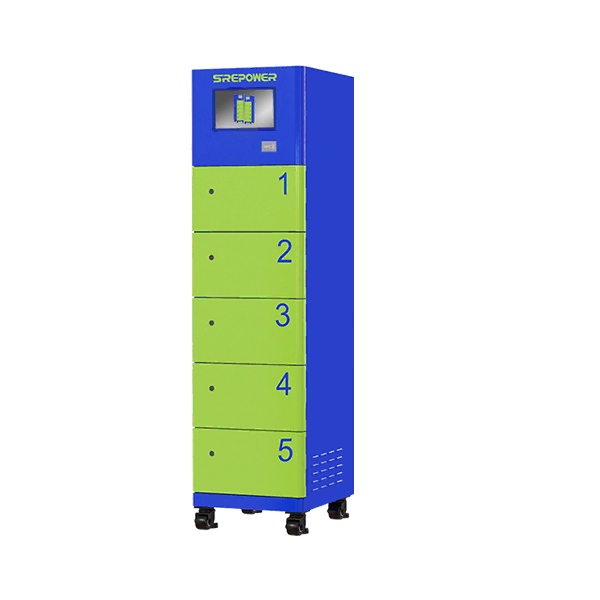
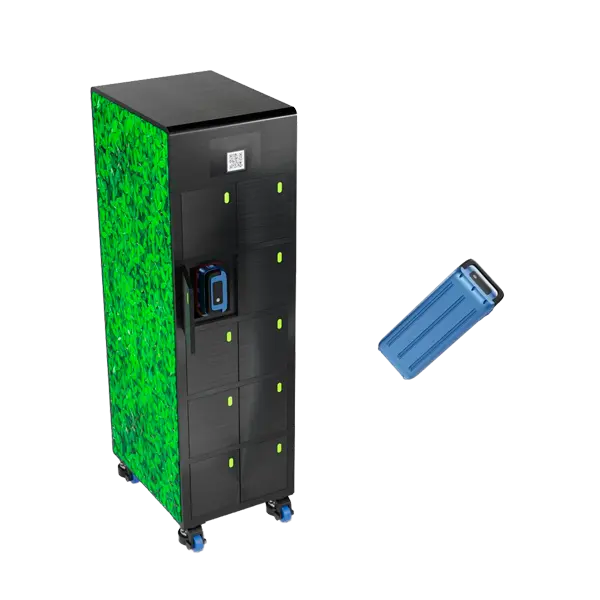
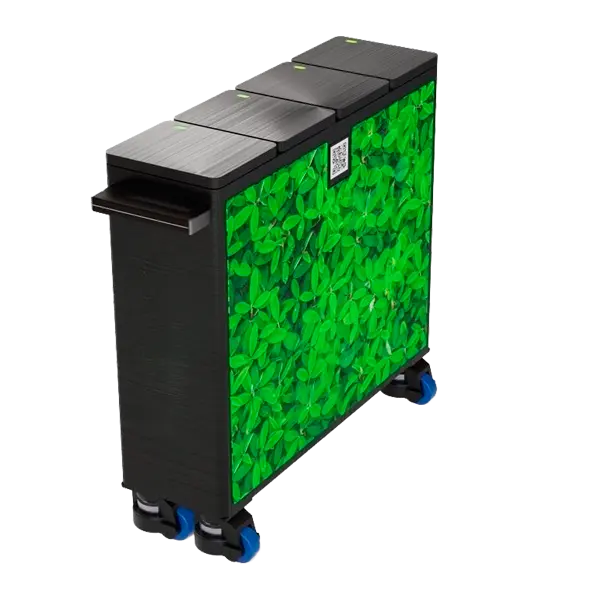
What are the issues to pay attention to when purchasing takeaway battery swapping cabinet equipment?
With the rapid development of the instant delivery industry, more and more food delivery platforms, delivery sites, and third-party operators are beginning to lay out battery swapping cabinet networks to improve rider efficiency and reduce operating costs. However, in the actual process of purchasing battery swapping cabinet equipment, many companies lack experience and neglect key details, resulting in difficulties in later operation and maintenance, cost overruns, and even frequent safety hazards.

So, what are the core issues that companies need to pay attention to when purchasing takeaway battery swapping cabinet equipment? The following suggestions are provided for your reference.
1、 Safety is the primary consideration
The essence of a battery swapping cabinet is an electrical equipment that involves multiple safety aspects such as battery charging and discharging, temperature control, and fire prevention. When purchasing, it is necessary to confirm whether the equipment has passed relevant national certifications (such as CCC, CQC, etc.), and whether it has basic safety functions such as overcharge protection, short circuit protection, temperature monitoring, smoke alarm, etc. Especially pay attention to whether the battery compartment is made of flame-retardant materials and whether the cabinet has explosion-proof design. If safety is not up to standard, all efficiency is just empty talk.
2、 Battery compatibility determines usage efficiency
There are differences in interfaces, communication protocols, and sizes among lithium batteries of different brands and models. If the battery swapping cabinet only supports a single brand of battery, it will greatly limit the choice of operators and increase their battery management costs. Therefore, it is necessary to clarify before procurement:
Does the cabinet machine support the connection of multiple brands of batteries?
Is the API interface open for easy integration with existing scheduling systems or battery management platforms?
Does it support remote firmware upgrades to adapt to future changes in battery standards?
A battery swapping cabinet with strong compatibility is the only way to truly achieve "plug and play, on-demand replacement".
3、 Operation and maintenance costs are more important than procurement prices
Many companies initially only focus on the unit price of equipment, but overlook long-term operation and maintenance costs. A cheap but high failure rate and slow maintenance response battery replacement cabinet can actually drag down overall operational efficiency. Suggest focusing on the following aspects:
Mean Time Between Failures (MTBF) of equipment;
Does the manufacturer provide 24/7 technical support;
Does it support remote diagnosis and OTA upgrade to reduce on-site maintenance frequency;
Is the replacement of accessories convenient and the cost transparent.
The true "cost-effectiveness" is reflected in the total cost of ownership (TCO) throughout the entire lifecycle.
4、 The adaptability of deployment environment cannot be ignored
Battery swapping cabinets are usually deployed in outdoor or semi outdoor scenarios, such as commercial districts, communities, and delivery station entrances. Therefore, the equipment must have good environmental adaptability:
It is recommended to achieve a waterproof and dustproof rating of IP54 or above;
The working temperature range should cover the local extreme climate (such as -20 ℃ in winter in the north and high temperature and humidity in summer in the south);
Whether the cabinet structure is stable and able to withstand wind and collision.
In addition, installation conditions also need to be considered - whether a foundation is needed, power connection method (mains/photovoltaic), network access (4G/WiFi), etc. Planning in advance can avoid rework in the later stage.
5、 The ability to integrate data and systems affects management efficiency
Modern battery swapping operations cannot be separated from digital management. When purchasing, it should be confirmed whether the equipment supports:
Real time monitoring of battery status and cabinet operation;
Generate operational reports (such as battery replacement frequency, full container occupancy rate, and fault records);
Seamlessly integrate with enterprise owned apps, rider terminals, or backend management systems.
If the system is closed and the data is isolated, it will greatly limit the subsequent large-scale operation and refined management.
6、 Choose suppliers with industry experience
The battery swapping cabinet is not a standardized fast-moving consumer product, but a comprehensive solution that integrates hardware, software, and energy management. It is recommended to prioritize suppliers with mature implementation cases in the fields of instant delivery and two wheeler battery swapping. We can understand the stability, delivery cycle, and after-sales service capabilities of their products through on-site inspections, customer interviews, and other methods.
Conclusion
Purchasing takeaway battery swapping cabinets is not simply about "buying equipment", but laying the foundation for operation in the next 3-5 years. Enterprises should break away from the mindset of "low price priority" and comprehensively evaluate from six dimensions: security, compatibility, operation and maintenance, deployment, system, and service, and choose truly reliable and sustainable partners.
Only by doing sufficient preliminary work can the battery swapping cabinet truly become an "infrastructure" for improving rider efficiency and reducing operating costs, rather than a sunk cost.
Hot Keywords:
swap charging station
battery swap station




 WhatsApp Contact
 WhatsApp Contact