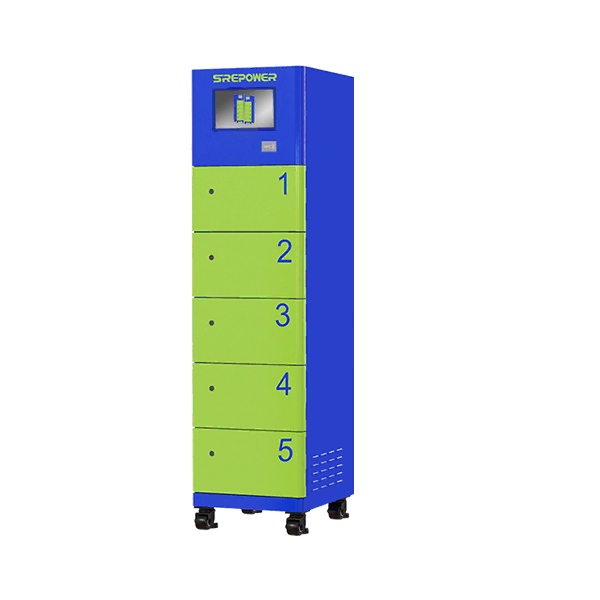
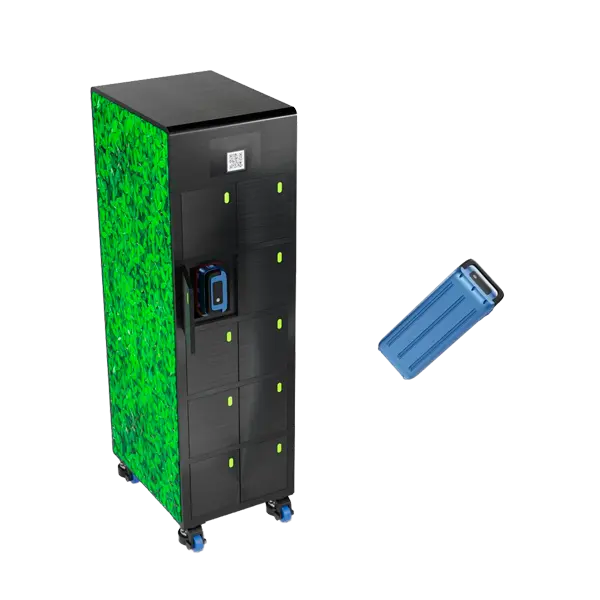
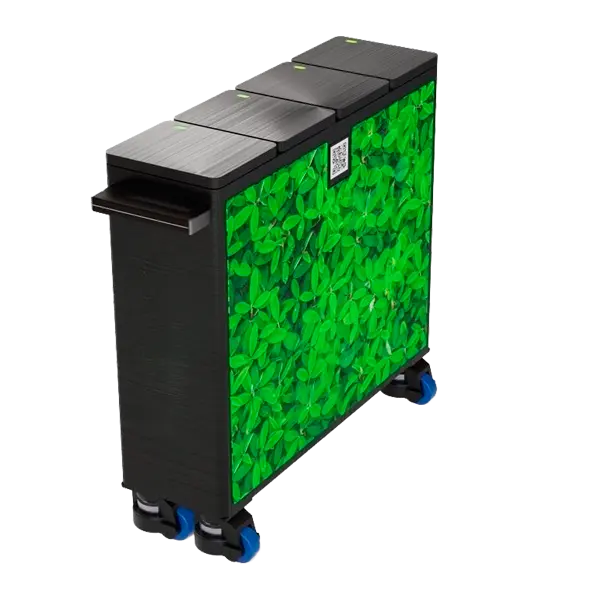
Operation and maintenance guidelines for summer and rainy season battery swapping cabinets.
Summer is a season of concentrated rainfall and coexistence of high temperature and humidity. The humid environment can easily lead to faults such as short circuits, leakage, and component corrosion in the power exchange cabinet, directly affecting the normal operation of equipment and user safety. In order to standardize the operation and maintenance of power exchange cabinets during the rainy season, prevent safety risks, and ensure stable and efficient operation of power exchange cabinets, this guideline is formulated and applicable to all outdoor and semi outdoor power exchange cabinet operation and maintenance work.
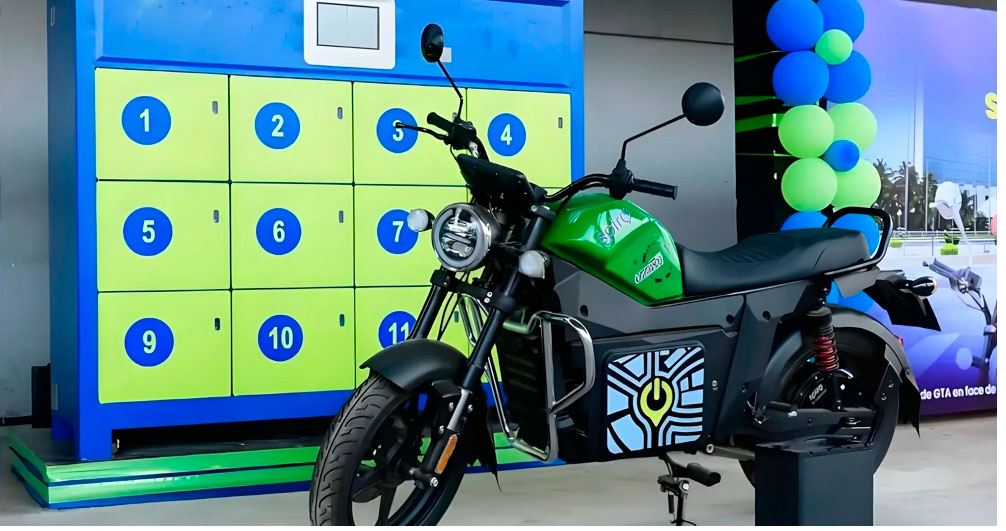
1、 Core principles of rainy season operation and maintenance
With "moisture prevention, short circuit prevention, leakage prevention, and rust prevention" as the core, we adhere to the principle of "prevention first, combination of prevention and control, and rapid response". We identify hidden dangers in advance, strengthen daily inspections, and promptly handle faults to ensure the normal operation of key components such as the electrical system, battery compartment, and heat dissipation system of the battery exchange cabinet, and prevent safety accidents from occurring.
2、 Pre rain preparation work (completed within 1-2 weeks before the onset of the rainy season)
(1) Thoroughly investigate the sealing performance
1. Check the sealing area of the battery exchange cabinet, focusing on the cabinet door sealing strip, cable interface, ventilation opening, maintenance opening and other parts. Confirm that the sealing strip is not aging, damaged or falling off, the interface is free of gaps or looseness, and the dust and waterproof cover of the ventilation opening is intact, which can effectively block rainwater infiltration.
2. For parts that are not tightly sealed, replace aging sealing strips in a timely manner, seal gaps with waterproof glue, ensure that the cabinet meets the waterproof level of IP54 or above, and prevent rainwater from entering the interior of the cabinet and contacting electrical components.
3. Check the sealing condition of the battery compartment, ensure that the battery compartment cover is tightly closed, the waterproof sealing ring is intact, and prevent rainwater from entering the battery compartment and causing short circuits or bulges in the battery.
(2) Electrical system protection inspection
1. Check the internal wiring terminals and line joints of the battery exchange cabinet to confirm that there is no looseness, oxidation, or exposure. Tighten the loose terminals in a timely manner, and wrap or replace the oxidized or exposed parts with insulating tape to prevent short circuits caused by rainwater contact.
2. Check the grounding system, confirm that the grounding terminal is firmly connected, the grounding resistance is ≤ 4 Ω, the grounding lead is not damaged or broken, and ensure that the current can be conducted in a timely manner during the rainy season to ensure personal and equipment safety.
3. Check the leakage protector, air switch and other protective devices to confirm their sensitivity and effectiveness, which can quickly trip and cut off the power supply in case of short circuit or leakage, and prevent the fault from expanding.
4. For outdoor installed power exchange cabinets, check the waterproof protection of electrical components such as distribution boxes and control boxes to ensure that their shells are intact, without damage or water ingress marks. If necessary, install waterproof covers to strengthen protection.
(3) Drainage and cleaning of surrounding environment
1. Clean up the accumulated water and debris (leaves, mud, garbage, etc.) around the battery replacement cabinet to ensure that there is no water soaking at the bottom of the cabinet, and that the surrounding drainage channels are unobstructed to prevent rainwater from flowing back to the bottom of the cabinet.
2. Check the installation foundation of the battery replacement cabinet, confirm that there is no settlement or inclination of the foundation. If there is water accumulation on the foundation, excavate drainage ditches or elevate the cabinet in a timely manner to prevent long-term immersion of water from causing rusting of the cabinet and failure of the bottom seal.
3. For power exchange cabinets located in low-lying areas and areas prone to water accumulation, protective measures should be taken in advance, such as building temporary rain shelters or arranging dedicated personnel to be on duty and inspect them promptly after rainfall.
(4) Equipment status pre check
1. Start the self check program of the battery swapping cabinet, check whether the power supply, communication, and heat dissipation functions of each battery compartment are normal, and whether the battery status (voltage, power, temperature) is stable. If any abnormalities are found, they should be dealt with in a timely manner.
2. Check the cooling system, clean the dust and debris on the cooling fan and cooling fins, ensure that the fan is running normally, the cooling channel is unobstructed, and avoid equipment overheating in high temperature and high humidity environments.
3. Backup the operation data of the battery swapping cabinet, check whether the communication module signal is stable, and ensure that data can be uploaded and operation and maintenance instructions can be received in a timely manner when a fault occurs.
3、 Rain inspection work (carried out regularly during rainy periods)
(1) Key area inspection
1. Conduct an inspection of the power exchange cabinet every 2-4 hours, focusing on low-lying areas and outdoor unobstructed power exchange cabinets, observing whether there are signs of water ingress and whether there is water accumulation around the cabinet.
2. Check if the cabinet door is tightly closed to prevent rainwater from seeping into the gaps of the cabinet door; Check if there is any rainwater dripping from the ventilation openings and cable interfaces, and if so, promptly cover or dispose of them with waterproof cloth.
3. Observe the status of the indicator lights and display screens in the battery replacement cabinet. If there are abnormal indicator lights, black screens, or error messages, immediately stop the equipment operation, cut off the power supply, mark and report.
(2) Safety protection requirements
During rain inspections, operation and maintenance personnel should wear protective equipment such as insulated shoes and gloves to avoid touching metal parts and electrical interfaces of the battery exchange cabinet with bare hands and prevent electric leakage and shock.
2. In case of rainstorm and lightning weather, outdoor patrol inspection shall be suspended, and troubleshooting shall be carried out after the weather improves. It is strictly prohibited to approach the power exchange cabinet, climb the cabinet or carry out maintenance operations in thunderstorm weather.
If water is found around the battery swapping cabinet and the water level is close to the bottom of the cabinet, immediately cut off the main power supply of the equipment, set up warning signs, prohibit users from using, and report to the relevant person in charge for handling.
4、 Post rain disposal work (to be completed within 24 hours after the end of rainfall)
(1) Thoroughly investigate the equipment status
1. Check the exterior of the battery replacement cabinet, clean the surface mud and water stains, check whether the cabinet is corroded or damaged, and whether the sealing is intact. If there is any damage, repair it in a timely manner.
2. Open the cabinet door and check if there are any signs of water or moisture inside the cabinet. Focus on checking the electrical components, wiring terminals, and battery compartment. If there is water accumulation or stains, immediately dry them with a dry cloth and a hair dryer (cold air mode) to ensure that there is no residual moisture inside.
3. Check the battery status to see if there are any abnormalities such as bulges, leaks, or odors. If any abnormal batteries are found, they should be immediately removed and isolated for storage. Continued use is strictly prohibited, and professional personnel should be contacted for handling.
4. Start the self check program of the battery replacement cabinet, comprehensively check the power supply, communication, heat dissipation, and battery replacement functions, and confirm that the equipment is normal before resuming normal operation; If a malfunction is detected, it should be promptly investigated and dealt with. It cannot be put into use until it is repaired.
(2) Drainage and Environmental Remediation
1. Thoroughly clean up the accumulated water, silt, and debris around the battery replacement cabinet, clear the drainage channels, and ensure that there is no hidden danger of water accumulation during subsequent rainfall.
2. Check the installation foundation of the battery replacement cabinet. If there is any settlement or tilt, adjust and reinforce it in a timely manner; If the foundation is damaged, it should be repaired in a timely manner to prevent rainwater from soaking again.
(3) Component maintenance and upkeep
Spray insulation protection agent on damp electrical components and wiring terminals to prevent oxidation and corrosion, and extend the service life of the components.
2. Check protective components such as sealing strips and waterproof adhesives, and replace them in a timely manner if they have aged or fallen off; Spray rust inhibitor on the metal parts of the cabinet to prevent rusting during the rainy season.
3. Clean the cooling system and check the operation of the cooling fan again to ensure that the cooling function is normal and to cope with high temperature and humidity environments after rain.
6、 Precautions for operation and maintenance personnel
1. Operation and maintenance personnel need to receive professional training, be familiar with the structure, electrical principles, and waterproof protection requirements of the transformer cabinet, and master the methods of fault handling before carrying out operation and maintenance work.
During the rainy season operation and maintenance, it is necessary to wear insulation protective equipment, strictly comply with safety operation regulations, prevent illegal operations, and prevent accidents such as electric shock and equipment damage.
3. Establish an operation and maintenance ledger to record in detail the situation of pre rain inspection, rain inspection, and post rain disposal, including the location of hidden dangers, treatment measures, and results, for easy traceability and summary in the future.
4. In case of uncontrollable faults (such as severe water ingress, circuit burnout, etc.), immediately stop the equipment operation, set up warning signs, report to relevant responsible persons and professional maintenance personnel, and strictly prohibit unauthorized disassembly and repair.
5. Regularly provide rainy season safety training and emergency drills for operation and maintenance personnel to enhance their ability to identify hidden dangers and handle faults efficiently, ensuring quick response and proper handling of emergencies.
7、 Emergency response process
1. After discovering the fault, immediately stop the operation of the power exchange cabinet, cut off the power supply, set up warning signs, and prohibit users from approaching and using it.
2. Quickly investigate the cause of the fault. If it is a simple fault (such as slight water ingress or switch tripping), follow the troubleshooting methods in this guide to handle it in a timely manner; If it is a complex fault, report it immediately.
3. In case of safety accidents such as electric leakage or fire, immediately activate emergency measures, evacuate surrounding personnel, call emergency numbers, and take measures such as power outage and fire extinguishing (using dry powder fire extinguishers and strictly prohibiting water extinguishing) to control the situation.
After the fault is resolved, the equipment status should be comprehensively checked to confirm that there are no safety hazards before resuming operation, and emergency response records should be kept.
Hot Keywords:
swap charging station
battery swap station




 WhatsApp Contact
 WhatsApp Contact