Language
French PortugalSpain
> News > Industry News > Which is more damaging to the battery, unplugging an electric vehicle when fully charged or unplugging it when not fully charged?
Industry News | 2025.09.04

Which is more damaging to the battery, unplugging an electric vehicle when fully charged or unplugging it when not fully charged?

Which is more damaging to the battery, unplugging an electric vehicle when fully charged or unplugging it when not fully charged?


We often encounter the following problem when charging electric vehicles: When is the battery fully charged? What if the charger cannot be unplugged in time when it is full? I know how long it will take to fill up, but what if I have to leave urgently? Can I unplug the charger in advance at this time? Do these practices have an impact on batteries? We will provide you with answers one by one in the following text


Electric vehicle charging is divided into three stages: constant current charging, constant voltage charging, and trickle charging (float charging)

The float charging time is 1-2 hours, the front face charging time is 6-8 hours, the charger turns green, and the float charging time is 0.5-1 hour. This is the normal time to unplug the charger. That means you need to float charge for half an hour to an hour after the charger display light turns green, and then unplug the charger. Being full without pulling out or pulling out without being full is not the best time, as both can have negative effects. Batteries require "float charging", which can cause serious damage to the battery when fully charged without unplugging. A maintenance type charging method using low current for batteries can prolong life. Batteries require float charging, but electric vehicles cannot be fully charged without unplugging.

Multiple sets of test charging process data show that when the battery is fully charged to 100%, the charger continues to charge the battery with a small current of about 0.3A-0.5A, which will cause the battery to "overcharge". The harm to the battery is that the temperature of the float charged battery rises for a long time, the high temperature accelerates the evaporation of electrolyzed water, the battery gradually damages, the active substances slowly lose, and ultimately cannot undergo chemical reactions. The charging efficiency of the battery decreases, the battery capacity shrinks, and the battery may swell or deform.

What are the effects of unplugging before fully charging?

Electric vehicles use lead-acid or lithium batteries, which do not have a "memory effect". If the battery is not fully charged, unplugging the charger will not damage the battery. However, unplugging the battery before it is fully charged is usually due to the car owner's urgent need to use it. At this time, the battery is in a high temperature state. If riding in high temperature weather, the battery will continue to heat up, resulting in water loss and swelling problems.

How to unplug the charger in a timely manner and how to charge it reasonably?

Since both unplugging when fully charged and unplugging when not fully charged are not good methods, we cannot immediately unplug the charger just after the float charge ends. So is there a way to unplug the charger in a timely manner after charging? In fact, in today's rapidly developing technology, it is not difficult.

There are now some intelligent timed shutdown chargers that can effectively monitor whether the battery capacity is 100%. Once it reaches full charge, the charger will automatically power off, so as not to form a small current to charge the battery and avoid overcharging. How to charge reasonably, provide 5 tips
1. Floating charging should not exceed 0.5 hours in summer and 1 hour in winter;

2. Use the smart charging station in the community, select full charge self stop, and the power will automatically cut off after being fully charged;

3. Try not to use fast charging devices and choose a charger of around 5A, which is beneficial for battery protection;

4. Do not mix chargers, charge electric vehicles with original chargers and matching parameters;

5. Intelligent charging stations can choose timed charging, set the length of time, and also achieve power outage as soon as the charging is just right.
Hot Keywords: charging station manufacturer charging column

What is the difference between a charging cabinet and a battery swapping cabinet?

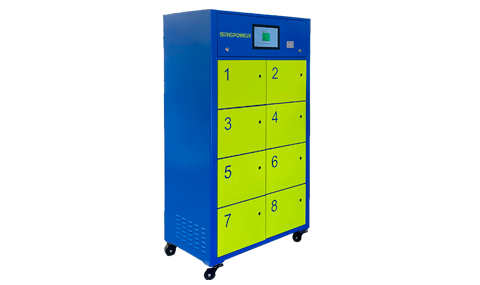
The charging cabinet is used by users to charge their own batteries. They need to unplug their own batteries, put them in the cabinet,

2025-03-21 Learn More
What is the difference between a charging cabinet and a battery swapping cabinet?

In which scenarios is the battery swapping cabinet suitable for use?

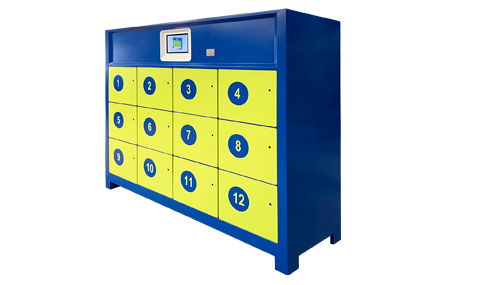
In order to solve the pain points of electric vehicle charging and endurance, efficient and convenient shared battery swapping cabinets have emerged.

2025-03-21 Learn More
In which scenarios is the battery swapping cabinet suitable for use?

How is the standardization progress of current battery swapping cabinets.

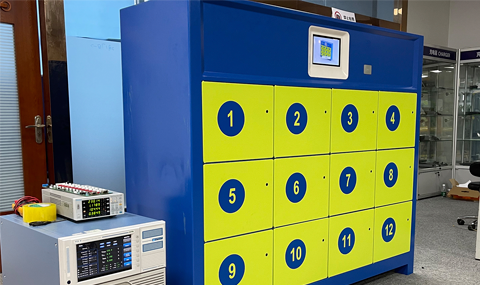
At present, the standardization progress of battery swapping cabinets is steadily advancing, and a series of specific standardization plans or standards will be introduced in the future to promote the standardized development of the industry.

2025-03-20 Learn More
How is the standardization progress of current battery swapping cabinets.

What are the benefits of installing electric bicycle charging cabinets and charging stations.

The number of electric bicycles is increasing, and how to safely and conveniently charge them is a problem for many people.

2025-03-20 Learn More

What are the benefits of installing electric bicycle charging cabinets and charging stations.

How to solve the charging problem of shared electric bicycles on the streets?

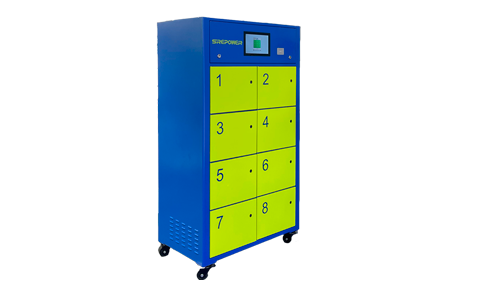
In recent years, shared electric bicycles, as an emerging green mode of transportation, have quickly emerged as a new favorite in the urban short distance travel market due to their convenience,

2025-03-19 Learn More

How to solve the charging problem of shared electric bicycles on the streets?

Analysis of the Development Trend of Battery Swap Cabinets in 2025.

As an important component of the new energy field, the future development trend of battery swapping cabinets can be analyzed from the following aspects:

2025-03-19 Learn More
Analysis of the Development Trend of Battery Swap Cabinets in 2025.
china ev charging companies-SRE Power
Follow us tiktok Linkedin Youtube facebook
Contact Us

Address:1001, Building T4, Haiku Technology Building, Bao'an District, Shenzhen, Guangdong, China.

Phone:+86-0755-23057134

E-mail:Info@srepowerne.com

SRE Power WhatsAppWhatsApp Contact

Copyright @ China ev fast charging manufacturers&companies&suppliers&vendor&provider- SRE Power
